
Europe’s competitiveness challenge is usually discussed in terms of regulation, fragmented markets, capital, energy and the widening innovation gap with the United States and China. Mario Draghi’s The Future of European Competitivenessprovides one of the clearest diagnoses of these structural challenges. Yet competitiveness is also shaped much closer to home: through thousands of decisions made inside European companies about investment, innovation, technology, capabilities and risk.
What if European boards saw themselves not only as stewards of today’s companies, but as active contributors to Europe’s renewal?
This question is also at the heart of a recent Beyond the Old Playbook podcast conversation with Fernanda Torre, leader of Boards Impact Forum, and Sylvia Robben, leader of Chapter Zero Netherlands, both organisations part of the Chapter Zero Alliance.
It provides a useful starting point for considering how boards might shift from predominantly protecting existing value towards creating future value.
From Protecting Value to Creating It
The painting opening the conversation was Umberto Boccioni’s The City Rises (1910).
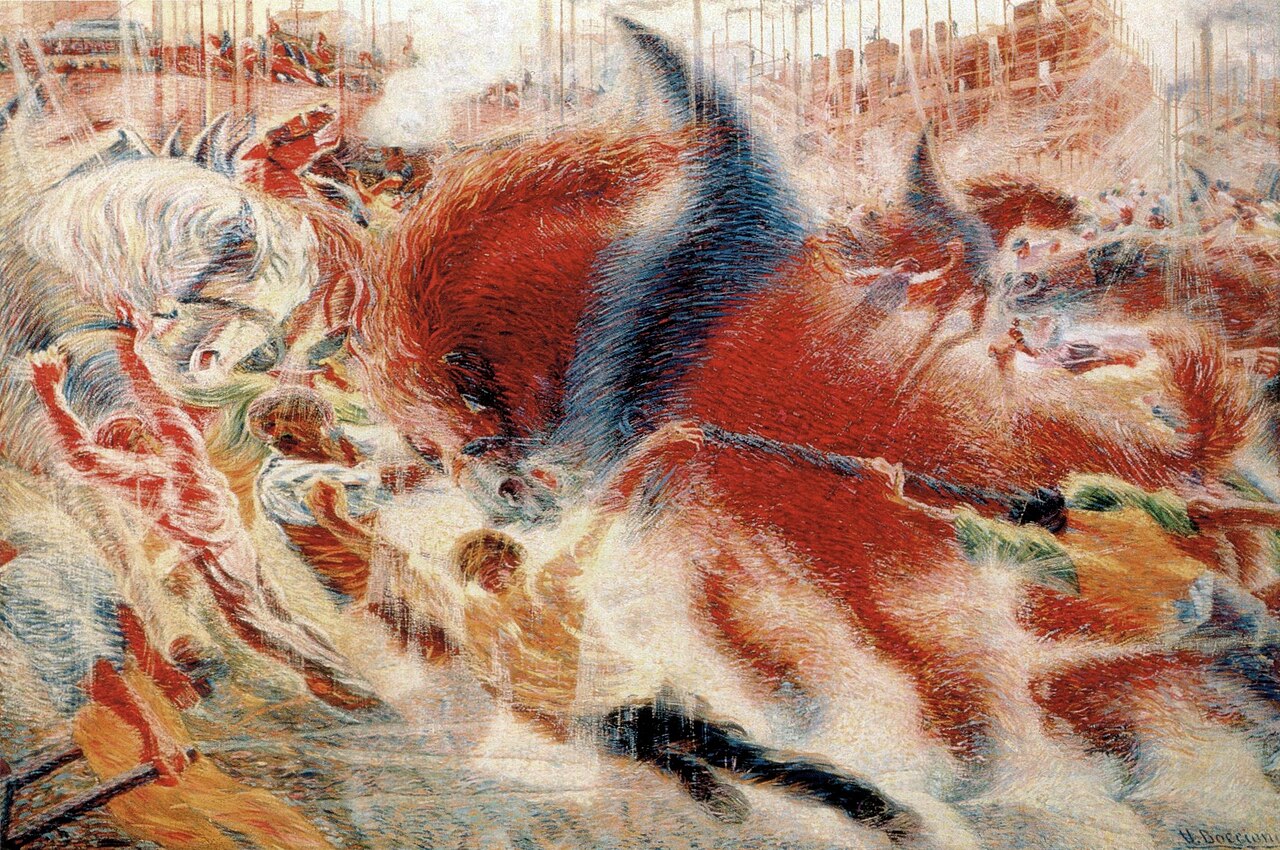 Umberto Boccioni, The City Rises, 1910. The Museum of Modern Art, New York.
Governing Renewal Before We Have All the Answers

Listen to the conversation
In this episode of Beyond the Old Playbook, Liselotte Engstam speaks with Fernanda Torre and Sylvia Robben about how European boards can strengthen competitiveness and resilience—and what it takes to shift from protecting today’s business to governing opportunity, renewal and the creation of tomorrow’s.
Fernanda Torre & Sylvia Robben, share how boards can strengthen competitiveness, and resilience.
Fernanda Torre and Sylvia Robben, board leaders working with Boards Impact Forum and Chapter Zero Neterlands, explore how European boards can contribute to competitiveness and resilience in a world of accelerating change.
Fernanda Torre and Sylvia Robben, board leaders, share how boards can strengthen competitiveness, resilience and corporate renewal.
Listen to this episode from Exploring Leaders by Digoshen on Spotify. Fernanda Torre and Sylvia Robben, board leaders working with Boards Impact Forum and Chapter Zero Neterlands, explore how European boards can contribute to competitiveness and resilience in a world of accelerating change.
A conversation with Fernanda Torre and Sylvia Robben
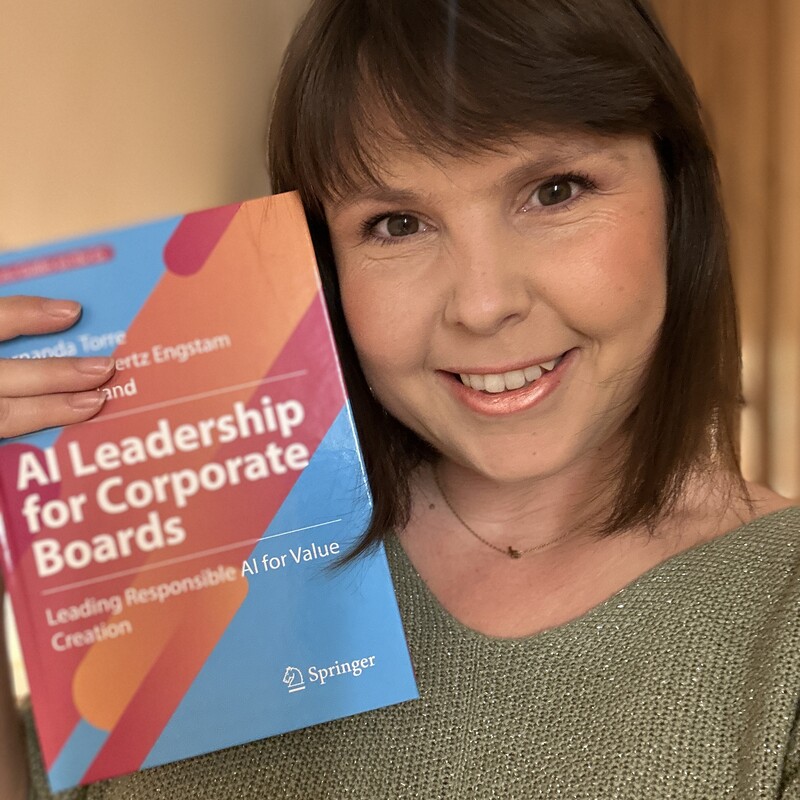
Fernanda Torre works at the intersection of innovation, sustainability and corporate governance, engaging boards across Europe on AI, long-term value creation and sustainability-driven transformation. She is COO and co-founder of Boards Impact Forum, the Nordic chapter of the Chapter Zero Alliance, and co-author of AI Leadership for Boards – Leading Responsible AI for Value Creation. Her work focuses on helping boards strengthen their capacity to govern innovation and renewal in an increasingly complex environment.
Connect with Fernanda Torre on LinkedIn
Explore Boards Impact Forum on LinkedIn
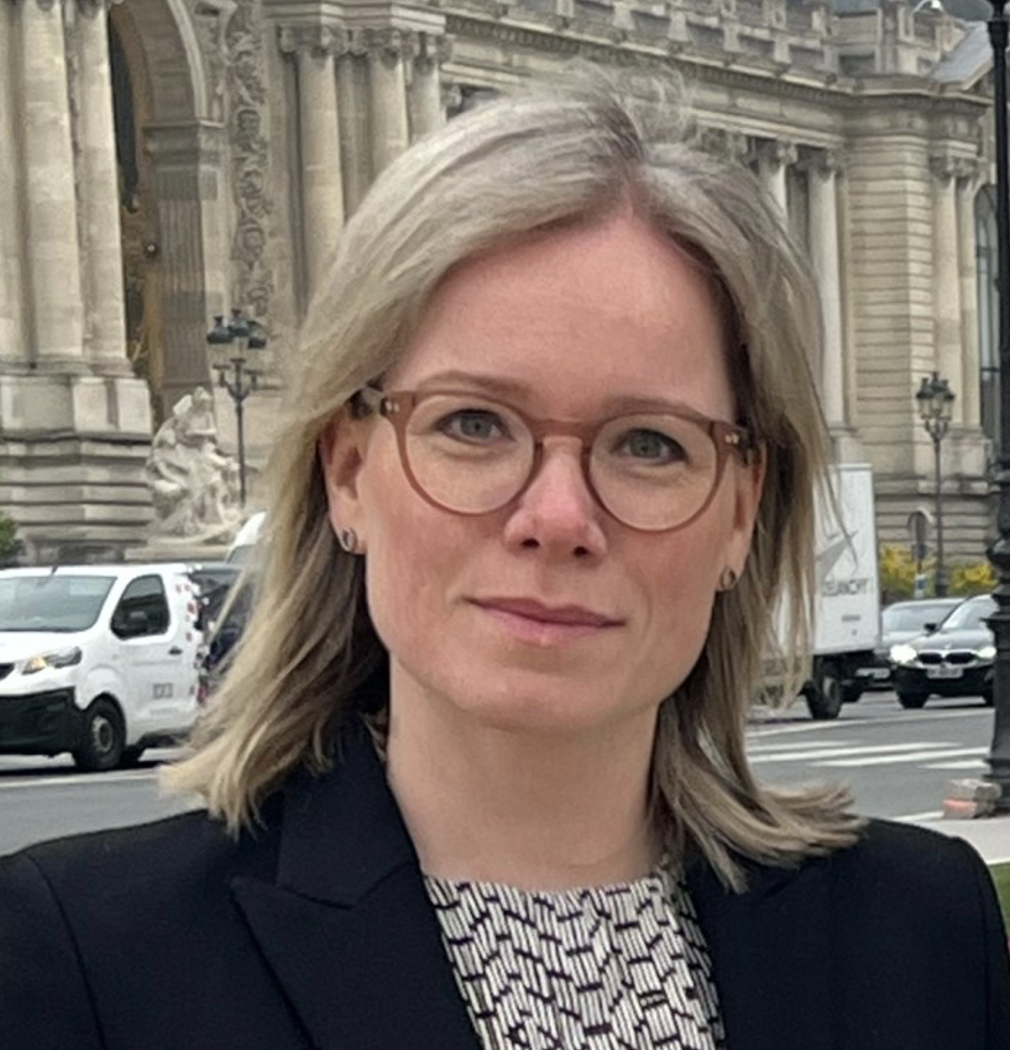
Sylvia Robben leads Chapter Zero Netherlands, part of the international Chapter Zero network supporting non-executive directors in bringing climate, sustainability and long-term value creation into boardroom discussions. Her work focuses on bringing directors together for peer exchange and practical dialogue on how boards can translate complex transitions into strategic action.
Connect with Sylvia Robben on LinkedIn
Chapter Zero Netherlands on LinkedIn
Explore Chapter Zero Alliance
From exploring to experiencing
European Boards Growth & Resilience Forum
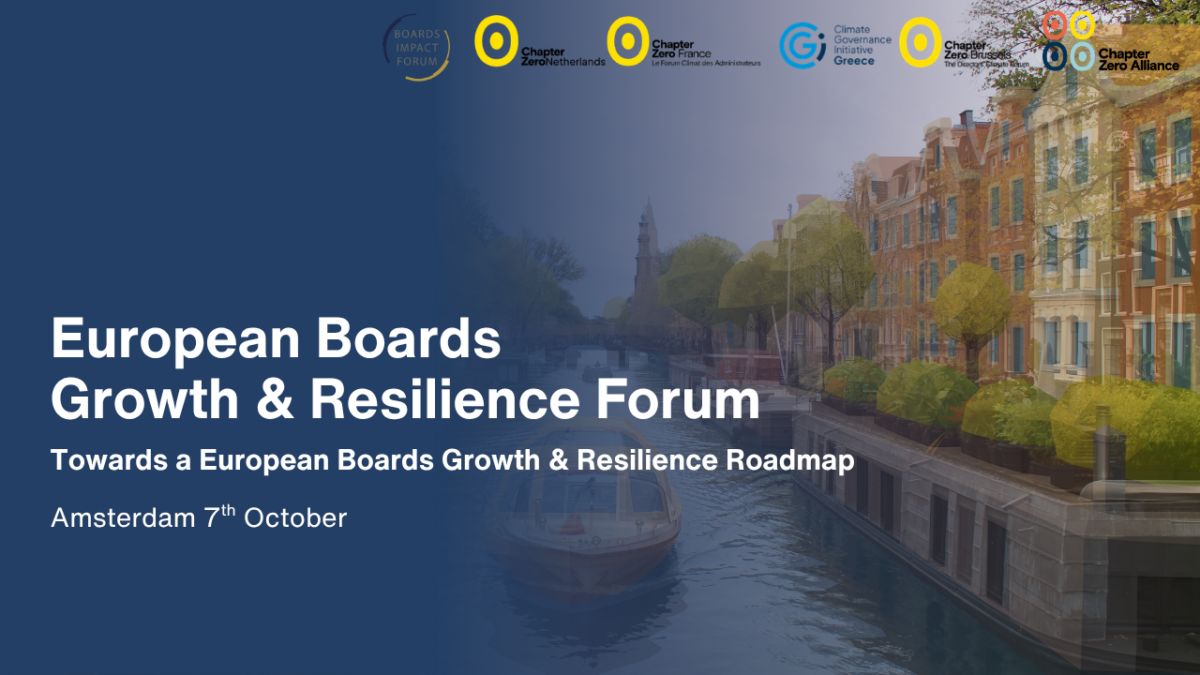
On 7 October 2026 in Amsterdam, the European Boards Growth & Resilience Forum brings together non-executive and supervisory directors from across Europe to explore how boards can strengthen European competitiveness, resilience and long-term value creation.
Through confidential peer exchange and working sessions, directors will connect geopolitical shifts, sustainability, AI and technology with the strategic choices facing their companies. Insights from the Forum will also contribute to the European Boards Growth & Resilience Roadmap, planned for publication in early 2027.
Explore the European Boards Growth & Resilience Forum
Boards Oversight of Responsible AI for Value Creation
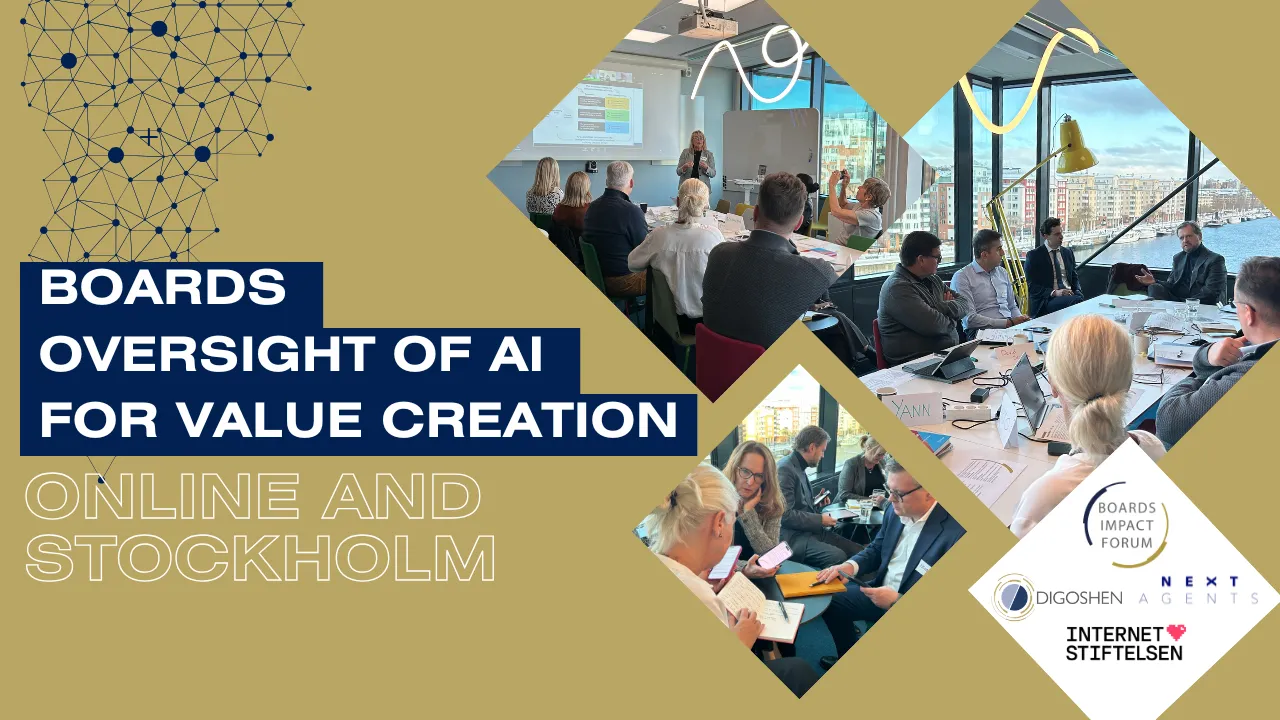
The Boards Oversight of Responsible AI for Value Creation programme, with a new cohort starting in October 2026, supports directors in moving from AI awareness towards effective oversight of its opportunities, risks and implications for value creation.
The programme helps directors strengthen their ability to ask better questions, challenge assumptions and engage management on responsible AI adoption, innovation and strategic value.
Explore Boards Oversight of Responsible AI for Value Creation
Webinar: The China Factor in Europe’s Competitiveness and Net Zero Transition
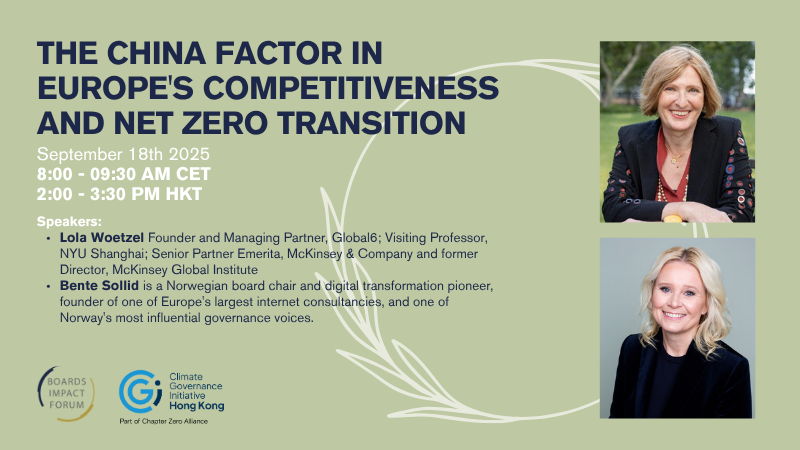
On 18 September 2026, Boards Impact Forum and Climate Governance Initiative Hong Kong Chapter host a webinar exploring how China’s position in green technologies, supply chains and industrial development is shaping European competitiveness, strategic dependencies and the net-zero transition — and what this means for boards.
Explore Further
The Future of European Competitiveness — The Draghi Report — Mario Draghi / European Commission, 2024
Board Overload — Asaf Eckstein, Roy Shapira and Ariel Shillo, 2026
Full research paper on SSRN
Valuing Companies in Transition — Dirk Schoenmaker and Willem Schramade, 2022
Experimental Evidence for Tipping Points in Social Convention — Damon Centola, Joshua Becker, Devon Brackbill and Andrea Baronchelli, Science, 2018
Global Board Survey 2026: From Governance Stewards to Business Shapers — InterSearch / REEF, 2026
How Organizations Use AI: Evidence from ChatGPT — 2026
Building Winning Intelligence: Designing for Strategic Advantage — Yves Doz and Soumitra Dutta, INSEAD, 2026
Getting Shareholders on Board With Your Sustainability Vision — Kevin Keusch, INSEAD, 2025
A Cross Section of Company Statements Supporting Climate Action — Lasdon and Smith, Harvard Law School Forum on Corporate Governance, 2026
Umberto Boccioni — The City Rises, 1910 — The Museum of Modern Art, New York
Watch MoMA’s video about The City Rises

This blog post was originally published on the Digoshen blog and the personal blog of Digoshen founder Liselotte Engstam.
At Digoshen, we help leaders and boards navigate an increasingly complex world shaped by AI, digital transformation, sustainability, geopolitical change, and evolving workforce dynamics.
Through research, executive education, thought leadership, coaching, and international networks, we translate emerging trends into practical insights that strengthen leadership, governance, innovation, and long-term value creation. We believe that the future belongs to organizations that successfully combine technological intelligence with human wisdom.
If you are a board member, executive, or leader interested in shaping the future of your organization, we invite you to explore our articles, research, podcasts, learning programs, and international communities.
You are also welcome to discover the Boards Impact Forum, chaired by Digoshen founder Liselotte Engstam, and Novisali, her artistic practice exploring leadership, reflection, and human experience through art.
Find more insights on the Digoshen website, explore Liselotte Engstam’s research on Google Scholar, and follow Digoshen on LinkedIn.