
What if clarity comes from moving?

We tend to think that knowing should come before doing. We understand the situation, gather information, consider alternatives, decide what to do, and then act. The same logic often shapes how we approach our careers and lives: understand what we want, choose a destination, make a plan, and start moving towards it.
It is a sensible model when the environment is reasonably knowable. But what happens when the situation is genuinely new? When technologies, markets and societies are changing faster than our ability to understand them? Or when we ourselves are changing and can articulate more easily what we are moving away from than what we are moving towards? In those moments, more analysis can refine what we already know, but it cannot always reveal what has not yet happened or what we have not yet experienced.
This is the territory explored in a new conversation with Lidija Drobež in the Beyond the Old Playbook podcast series, centred on the question: How do we learn to move when the future is still unfolding?
Beyond the Old Playbook explores how leaders and boards navigate a world in which familiar assumptions, established approaches and old playbooks are no longer enough. Across the series, conversations have explored uncertainty, competitiveness, AI, sustainability, risk, perspective and change. Within that wider journey, three conversations with Lidija have followed a particular thread: the first asked what happens when our need for certainty becomes part of the problem; the second turned to perspective and whether the limitation might sometimes be how we see; and this third moves from reflection towards action—how do we begin moving without having all the answers, learn from what happens, and allow that learning to shape what comes next?
The conversation begins with Hilma af Klint’s Evolution, No. 13, Group VI (1908). With its intersecting shapes and symbolic forms, the work seems simultaneously structured and still in formation. Rather than trying to decode it into one fixed meaning, it becomes an invitation to consider movement and transformation. It is a fitting place to begin. We often imagine movement as something that follows clarity: first we understand, then we move. But transformation does not always happen in that order. Sometimes movement itself changes what becomes visible.

Sometimes we act because we know. But sometimes we need to act in order to know.
So perhaps the question is not only How can we know enough to move? but What might we discover only by moving?
Sometimes we have to act to know
Not all knowledge exists waiting to be discovered through better analysis. Some emerges only through our interaction with reality. A prototype meets a customer, a team tries a different way of working, or a new technology is applied to an actual problem. Reality responds, creating information that was not available when the idea existed only in a presentation or plan.
The same is true for us as individuals. A conversation can change what we understand; trying something unfamiliar can reveal whether it interests or energizes us. This becomes particularly important during transitions, when we often assume that we first need to work out who we want to become and then construct a path towards that future. Yet transitions can unfold in the opposite direction. By trying things, meeting different people and entering unfamiliar environments, we gradually discover what attracts us, what matters, and what we might want more—or less—of in the next chapter.
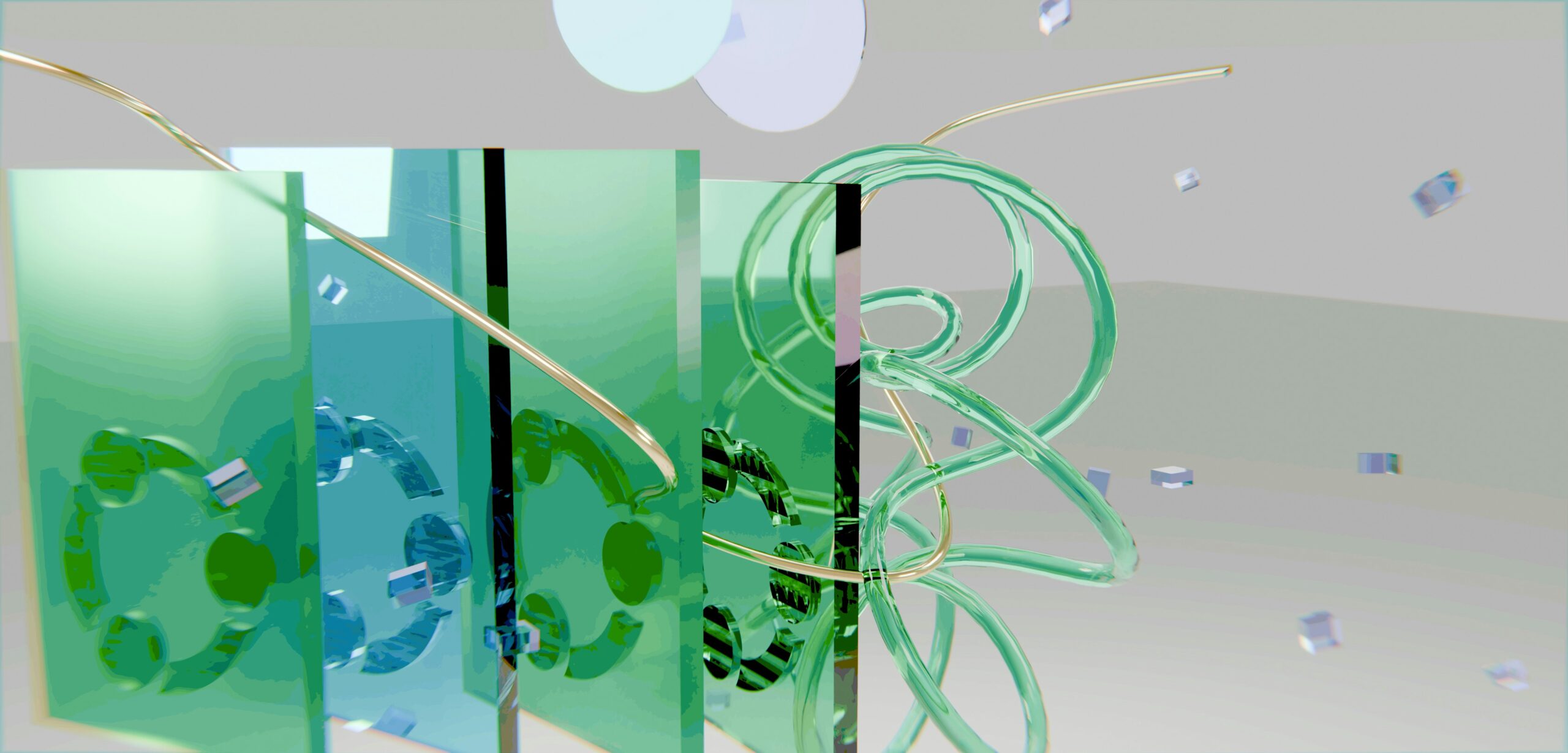
Rather than choosing one fully formed future self, we can explore several possible selves. Some become more compelling as we experience them; others lose their attraction when they become real. This can be particularly challenging after we have become successful at something. Expertise gives us confidence and opportunity, but can also increase the perceived cost of becoming a beginner again. Continued learning may require being willing to step outside what we already know.
Action therefore has another function beyond implementation: it can be a form of inquiry. Instead of asking only What should we do?, we can ask What don’t we yet know that matters, and what could we do to find out? Analysis helps us work with information we already have; action can generate information we do not yet have. Sometimes what we discover is not simply what works, but what matters to us.
The advantage is not moving faster — it is learning faster
This is not an argument for speed or dramatic leaps into the unknown. We can be extraordinarily busy while learning very little. Action becomes valuable when it is connected to attention, reflection and adaptation. When we do not know, the most useful question may therefore not be What is the right decision? but What is the next step that could help us learn?
For someone considering a different professional future, that step might mean teaching, joining an advisory project, developing an idea alongside an existing role, taking a course or entering a different community. These are ways of making possible futures sufficiently real to learn from them. In leadership, a small behavioural experiment can serve a similar purpose. Trying to listen differently, delegate more, or ask different questions in a real situation can reveal far more than simply understanding the idea intellectually.

Organizations can use the same principle. Rather than making a large commitment based on several untested assumptions, a smaller move can test what matters most before substantially more resources are committed. If the purpose is learning, an unexpected outcome is not necessarily a failed outcome; it may expose an assumption early enough for us to change direction.
The discipline lies in what happens next. What did we expect? What actually happened? What surprised us? What did we learn, and what does that suggest about the next move? These questions help determine whether to continue, adjust, amplify or stop, and they also run through the podcast conversation as Lidija explores experimentation, feedback loops and the signals that tell us when to persist or change course.
Experimentation without reflection, however, can simply create activity. Organizations can accumulate pilots that never scale, just as individuals can keep trying new things without learning from them. Movement becomes valuable when there is direction and an intention to learn. The advantage is therefore not necessarily moving faster, but learning faster from moving.
Why knowing this doesn’t mean we move
If movement can help us discover what we cannot know in advance, why can taking the first step still be so difficult? Part of the answer is that uncertainty is not simply an information gap. We experience it emotionally and socially as well as intellectually.
Moving exposes us to feedback and to the possibility that something we hoped for may not work. It can also challenge how we see ourselves. A new direction may mean temporarily being less competent than we are accustomed to being, or letting go of part of an identity before a new one has fully emerged. It is easy, then, to keep thinking: to do more research, seek another opinion or wait for greater clarity. Sometimes that improves our understanding; sometimes it simply postpones the encounter with reality that would provide the information we need.
Waiting can feel neutral, but it is also a choice. It may preserve some possibilities while closing others, and it deprives us of whatever information action might have generated.

Organizations face a similar tension. Uncertainty can make teams retreat towards familiar practices, leaders defend previous decisions, and systems demand levels of predictability that are simply unavailable. Questions of identity, status, relationships and anxiety can reinforce this pull towards the familiar. At precisely the moment when uncertainty makes experimentation more valuable, it can make us less willing to experiment.
Moving without knowing therefore requires more than a method. It requires the capacity to remain curious when we would rather have an answer, to tolerate an unfinished picture, and to distinguish between not knowing yet and not knowing what we are doing. A leader or team can acknowledge: We don’t know yet. This is what we currently believe, this is what we are going to try, and this is what we hope to learn. That is not an abandonment of rigour. It is a different form of rigour—one in which assumptions are visible, learning is intentional, and changing direction in response to experience is part of the process.
.
From prediction to navigation
Perhaps this points towards a broader shift in how we think about leadership, careers and life transitions. We often approach all three as though they should follow a plan: choose the destination, determine the route and progress towards it. Planning remains valuable, but some periods of organizational and personal life simply do not unfold that way. Navigation may be a more useful metaphor.
A navigator does not move without direction. There is still purpose, judgment and a sense of orientation, but the entire route does not need to be visible before movement begins. For individuals, this means we can know something about what matters to us without knowing exactly where it will lead. A new professional identity can emerge through experiments, relationships and experiences rather than having to be fully conceived in advance. For leaders, it means remaining attentive to what changes as we move: decisions create consequences, consequences create new information, and that information may change the next decision.

For organizations, purpose and strategic ambition can provide orientation while experimentation helps discover the route. The challenge is to connect curiosity with discipline—to explore where knowledge is missing, learn before committing too much, and increase commitment as evidence accumulates. This requires enough conviction to move and enough humility to change.
Sometimes movement confirms our direction. Sometimes it changes the route or reveals an opportunity that could not have been anticipated. And sometimes movement changes us, revealing interests, capabilities, relationships and possibilities that were not visible from where we began.
Moving without knowing is therefore not primarily about becoming more comfortable with risk. It is about developing a different relationship with knowledge: accepting that some things can be understood through analysis and reflection, while others can only be discovered through experience. The challenge is not to replace thinking with action or planning with improvisation, but to connect them differently—to reflect, move, experience what happens, make sense of what we learn and allow that learning to inform the next move.
We may not need to see the whole road to begin. Sometimes the next step is what allows us to see further. And perhaps the question worth carrying with us is: What could we learn by moving that we cannot learn by standing still?
Listen to the conversation
This episode of Beyond the Old Playbook continues the exploration of how leaders navigate change when familiar answers are no longer enough. With Lidija Drobež, the conversation moves from action and experimentation through feedback and learning towards adaptation and purposeful movement.
See it on Youtube
Lidija Drobež, business leader & coach, explores how action create learning & reveal possibilities.
Lidija Drobež, experienced business leader and executive coach, explores how we can move forward when the future is still unfolding. Drawing on leadership practice, experimentation, and reflection, she examines how action itself can become a way of learning-helping us test assumptions, create feedback, and discover possibilities that cannot always be seen in advance.
Listen at Spotify
Lidija Drobež, business leader & coach, explores how taking action can create learning and reveal possibilities we cannot see in advance.
Listen to this episode from Exploring Leaders by Digoshen on Spotify. Lidija Drobež, experienced business leader and executive coach, explores how we can move forward when the future is still unfolding.
The conversation closes with a deliberately practical question:
What is one small step you could take today instead of waiting until you know exactly where the road will lead?
About Lidija Drobež

Lidija Drobež combines international leadership experience, executive coaching, and the arts. After a successful corporate career, she has spent more than 25 years supporting leaders and organizations through change, uncertainty, and reinvention.
As founder of Galleria l’arte di seta and a Fellow of the Institute of Coaching at Harvard Medical School, she integrates coaching, creativity, and reflective practice to help leaders expand their perspectives and discover new possibilities. Connect with Lidija Drobez at Linkedin
From exploring to experiencing
Navigating Uncertainty Leadership Renewal Journey
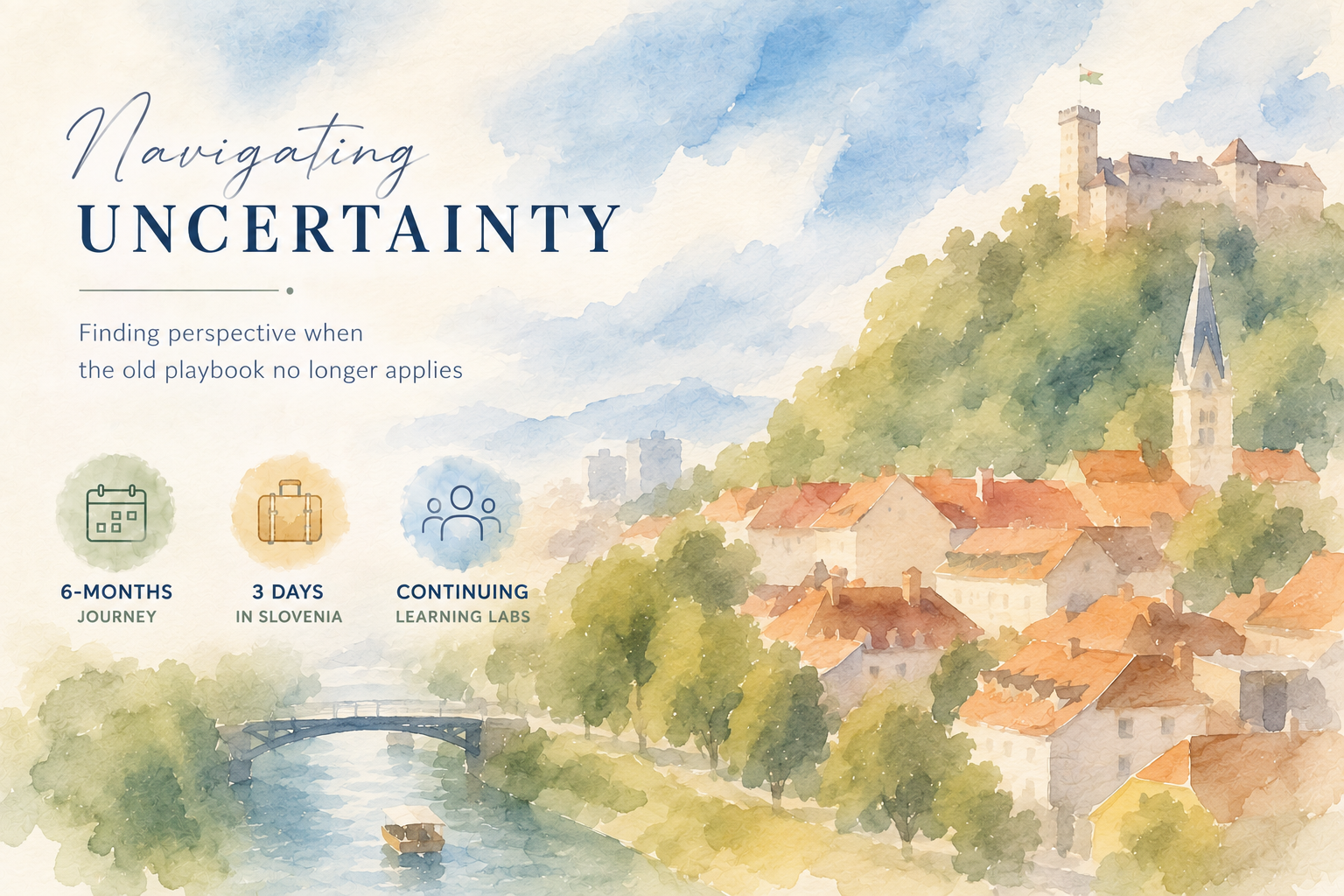
If these questions resonate, Navigating Uncertainty offers an opportunity to explore them more deeply.
This six-month executive learning journey combines coaching, dialogue, art, place and reflection to strengthen four distinctly human capabilities for uncertain environments: seeing, reframing, adapting and renewing.
Explore Navigating Uncertainty and the 2026–2027 cohort
Boards Oversight of Responsible AI for Value Creation
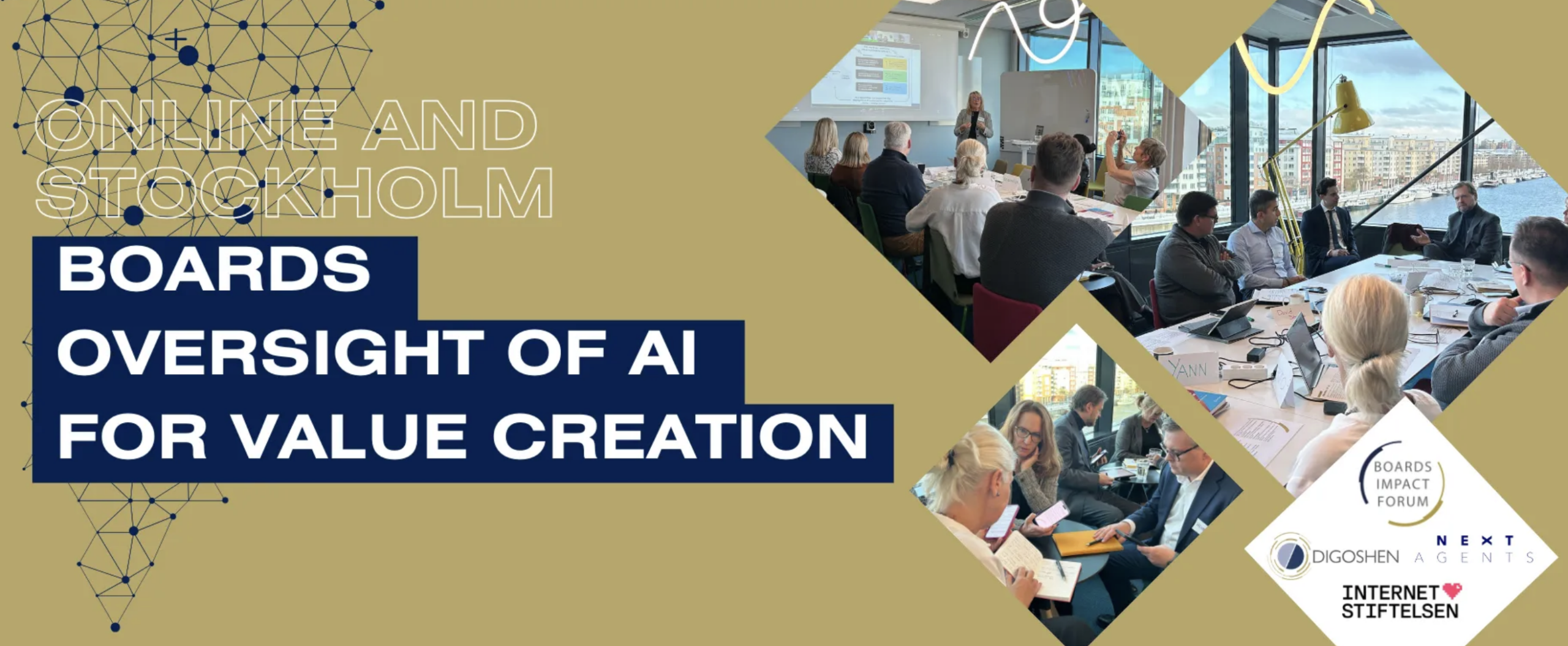
For board members who want to move from reading and discussion to direct experience, the Boards Oversight of Responsible AI for Value Creation — October 2026 Cohort offers a practical learning journey for chairs, non-executive directors, corporate secretaries and senior leaders who want to understand AI from the board’s perspective.
Explore Boards Oversight of Responsible AI for Value Creation
European Boards Growth & Resilience Forum
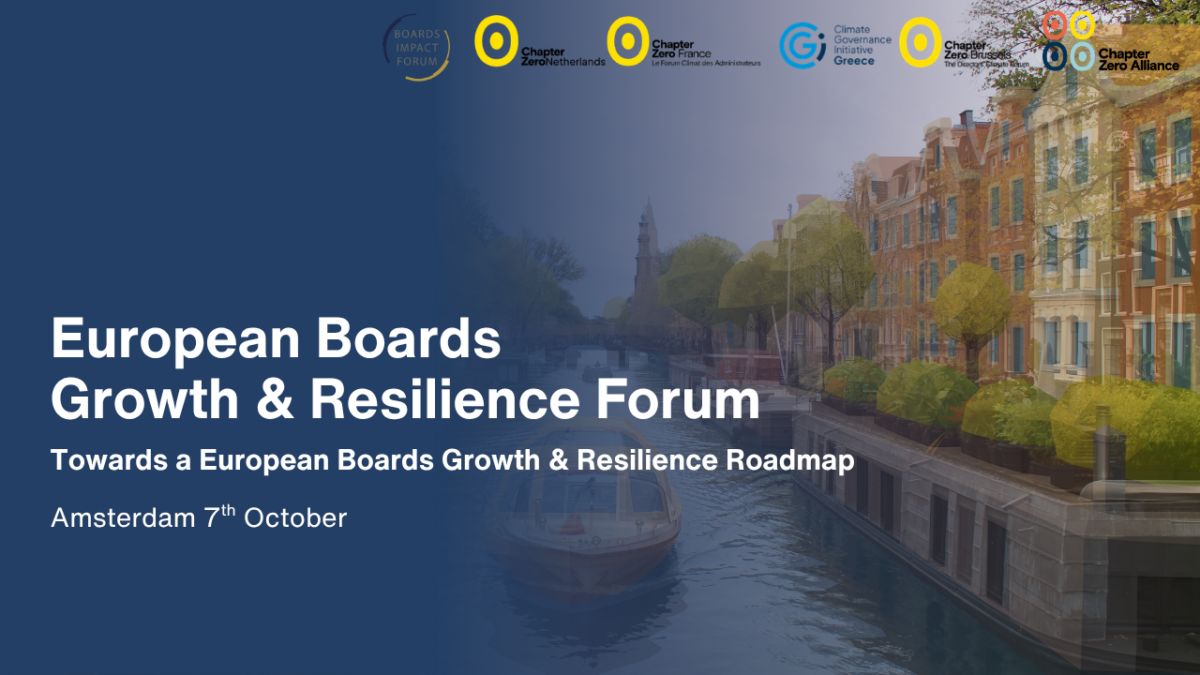
And do you want to meet Lars and other experienced board directors and discuss current and cirtical board questions; On 7 October 2026 in Amsterdam, the European Boards Growth & Resilience Forum brings together non-executive and supervisory directors from across Europe to explore how boards can strengthen European competitiveness, resilience and long-term value creation.
Through confidential peer exchange and working sessions, directors will connect geopolitical shifts, sustainability, AI and technology with the strategic choices facing their companies. Insights from the Forum will also contribute to the European Boards Growth & Resilience Roadmap, planned for publication in early 2027.
Explore the European Boards Growth & Resilience Forum
Explore Further — Research behind the article
The article draws on recent research and thinking on experimentation, learning through action, professional identity, career transitions, leadership development and organizational adaptation. All references below are from 2022 onwards.
- Bojinov, I., Holtz, D., Johari, R., Schmit, S. & Tingley, M. (2025), “Want Your Company to Get Better at Experimentation?” — Harvard Business Review. On widening access to experimentation and using tests to learn rapidly and refine ideas.
https://hbr.org/2025/01/want-your-company-to-get-better-at-experimentation - Ibarra, H. (2023), “Why Career Transition Is So Hard” — Harvard Business Review. On career reinvention, uncertainty and the identity work involved in transitions.
https://hbr.org/2023/11/why-career-transition-is-so-hard - Ibarra, H. (2023), Working Identity: Unconventional Strategies for Reinventing Your Career, updated edition — Harvard Business Review Press. On possible selves, identity experiments, new networks and learning one’s way towards a different professional identity.
https://store.hbr.org/product/working-identity-updated-edition-with-a-new-preface-unconventional-strategies-for-reinventing-your-career/10659 - Ibarra, H., Smith, K. & Courtis, N. (2023), “5 Barriers to Career Change—and How to Overcome Them” — Harvard Business Review. On barriers to and enablers of career transition.
https://hbr.org/2023/12/5-barriers-to-career-change-and-how-to-overcome-them - Briceño, E. (2023), The Performance Paradox — Stanford Graduate School of Business. On the tension between continual performance and creating space for experimentation, feedback, mistakes and learning.
https://www.gsb.stanford.edu/alumni/news/books/performance-paradox - Furr, N. & Shipilov, A. (2026), “The Trap Behind AI Experimentation” — INSEAD Knowledge. On why experimentation needs to connect to strategic purpose and value rather than becoming a proliferation of disconnected pilots.
https://knowledge.insead.edu/strategy/trap-behind-ai-experimentation - Christopoulos, C. & Watkins, M. (2026), “The Missing Ingredient That Makes Leadership Development Stick? Micro-experiments” — IMD. On using small experiments in real situations to turn insight into behavioural learning.
https://www.imd.org/ibyimd/leadership/the-missing-ingredient-that-makes-leadership-development-stick-micro-experiments/ - Bonsall, A. & Meister, A. (2025), “Gripped by Uncertainty? How to Unfreeze Through Experimentation” — IMD. On using small, intentional actions to generate information and movement when uncertainty creates paralysis.
https://www.imd.org/ibyimd/brain-circuits/gripped-by-uncertainty-how-to-unfreeze-through-experimentation/ - Tavistock Institute of Human Relations (2024), “What Is Action Research?” On iterative cycles of planning, acting, observing and reflecting and the human and relational dynamics involved in change.
https://tavinstitute.org/news/what-is-action-research - McKinsey & Company (2026), The State of Organizations 2026. On organizational adaptation amid technological innovation, economic disruption, geopolitical fragmentation and changing workforce expectations.
https://www.mckinsey.com/capabilities/people-and-organization/our-insights/the-state-of-organizations - Heidrick & Struggles (2022), Leading in Uncertainty: A Playbook for Harnessing the Power of Agility. On adaptability, changing priorities and adjusting established approaches as circumstances evolve.
https://www.heidrick.com/-/media/heidrickcom/publications-and-reports/playbooks/leading-in-uncertainty-playbook.pdf
About Digoshen

This blog post was originally published on the Digoshen blog and the personal blog of Digoshen founder Liselotte Engstam.
At Digoshen, we help leaders and boards navigate an increasingly complex world shaped by AI, digital transformation, sustainability, geopolitical change, and evolving workforce dynamics.
Through research, executive education, thought leadership, coaching, and international networks, we translate emerging trends into practical insights that strengthen leadership, governance, innovation, and long-term value creation. We believe that the future belongs to organizations that successfully combine technological intelligence with human wisdom.
If you are a board member, executive, or leader interested in shaping the future of your organization, we invite you to explore our articles, research, podcasts, learning programs, and international communities.
You are also welcome to discover the Boards Impact Forum, chaired by Digoshen founder Liselotte Engstam, and Novisali, her artistic practice exploring leadership, reflection, and human experience through art.
Find more insights on the Digoshen website, explore Liselotte Engstam’s research on Google Scholar, and follow Digoshen on LinkedIn.