
Recognising when the old playbook has stopped working – and finding direction before we know the destination
Success teaches us what works. Organisations build capabilities, routines and ways of making decisions from accumulated experience. But success creates its own vulnerability: the more often a particular way of thinking has produced results, the harder it can be to recognise when the conditions that made it successful have changed.
This is the question at the centre of our latest Beyond the Old Playbook conversation with Scott Newton: How do we recognise when what made us successful yesterday may prevent us from succeeding tomorrow?

We begin with Edvard Munch’s The Sun, painted in 1911. A powerful sun rises above a familiar landscape, changing how we see what is already there. Perhaps there is something in that image for leaders facing profound change. When technologies, markets, geopolitics, societal expectations and competitive boundaries shift, the first challenge may not be finding the next strategy, but recognising that some of the assumptions underneath the existing one are no longer true.
When experience stops being enough
The old playbook rarely announces that it has stopped working. Customers remain, revenues continue and existing capabilities still create value. A new competitor may appear marginal, a technology immature, or an unexpected result temporary. This ambiguity makes structural change particularly difficult to recognise.
Stanford research offers an interesting illustration. When researchers changed the competitive rules in an experimental environment, teams initially relied more heavily on familiar strategies rather than becoming more innovative. When the world becomes less familiar, our instinct may be to reach more strongly for what we already know.

Past success gives organisations not only capabilities but explanations: who our customers are, what they value, where our advantage comes from and how our industry works. These assumptions create efficiency – until efficiency becomes inertia.
MIT Sloan offers a useful distinction between what is enduring, eroding and emerging. The question is not whether yesterday’s playbook was wrong, but whether the conditions that made it successful still exist. IMD makes a related point: when the rules of global business are being rewritten, leaders need to interpret uncertainty, adapt and continuously reframe rather than simply execute against assumptions inherited from a more predictable era.
Leaders and boards therefore need to pay attention to what no longer fits: developments repeatedly dismissed as anomalies, outcomes our existing view struggles to explain, or new competitors succeeding according to assumptions different from ours. Perhaps one of the earliest indications that a playbook is becoming obsolete is the growing amount of explanation required to defend it.
Renewal may require leaving something behind
Recognising that the world has changed is one thing. Accepting what that means for ourselves and our organisations can be much harder. Most organisations know how to add: another initiative, technology, capability, KPI or transformation programme. Genuine renewal may also require subtraction – deciding what should be retained, what needs to be adapted and what we are prepared to leave behind.
INSEAD’s Annie Peshkam and David Dubois argue that organisations invest heavily in acquiring new knowledge but pay much less attention to unlearning assumptions, habits and reflexes that no longer serve them. Unlearning does not mean forgetting experience or dismissing what has worked. It means becoming capable of examining established scripts rather than automatically acting from them.

That distinction matters because transformation is usually framed around the future: What capabilities do we need? What technology should we invest in? What markets should we enter? An equally powerful question may be: What must we be prepared to stop being?
Some things should remain. Purpose, trust, distinctive expertise, relationships and hard-won knowledge may become even more important in uncertain conditions. Others need to evolve, while some assumptions, incentives, structures or business models may actively constrain renewal.
This becomes particularly difficult when what needs to change is connected to identity. Beliefs such as ‘this is how our industry works’ or ‘this is what our customers value’ can move almost unnoticed from observations about the business to statements about who we are. IESE research on how incumbents respond to disruption reinforces the importance of this framing: how leaders interpret change influences how organisations mobilise around it. The hardest thing to leave behind may therefore be neither a product nor a strategy, but a story about who we are.
The same is true personally. Experience gives leaders judgement, but also habits and identities. Being the expert, knowing the answer, moving quickly and staying in control may have contributed to past success, yet become limiting when circumstances require greater curiosity, experimentation and openness.
Recent INSEAD and Harvard Business Review work distinguishes between accumulating competence and expanding capacity. Competence grows through skills and experience; capacity may also require unlearning assumptions about speed, reassurance and control. Stanford offers another useful metaphor – ‘repotting’. Drawing on John Gardner’s work on self-renewal, it describes periodically placing ourselves in new circumstances where we have to learn again and see challenges differently. Renewal does not require abandoning our roots; sometimes it means giving them new ground in which to grow.
The question is therefore not simply What do we need to learn next? It is also: What do we need to unlearn to make that learning possible?
Direction without knowing the destination
Letting go of an established playbook creates another challenge. If the old answers are becoming less reliable and the new ones have not yet emerged, how do leaders provide direction?
Traditional strategy offers a reassuring sequence: analyse, determine the destination, plan, allocate resources and execute. Structural uncertainty complicates this. Technologies create possibilities we cannot fully understand in advance, geopolitics reshapes markets and supply chains, customer behaviour changes and new competitors emerge. Waiting for the destination to become clear may feel prudent, but waiting is also a strategic choice.
This is where experimentation becomes more than an innovation method; it becomes a way of navigating. MIT CISR describes test-and-learn organisations as moving from strategic objectives to hypotheses, experiments, learning and adaptation. Rather than trying to eliminate uncertainty before acting, organisations design actions that help them learn. A company can test a proposition with one customer segment, build a partnership before acquiring a capability, or make staged investments rather than committing all its resources at once.
The strategic rhythm shifts from predict, plan and execute towards orient, act, learn and reorient.
Experimentation, however, cannot remain a collection of pilots. INSEAD research on open innovation points to a recurring challenge: organisations may be good at finding ideas, technologies and partners, yet struggle to integrate promising innovations and turn them into sustained value. MIT Sloan research on scaling digital initiatives similarly shows that promising ideas can stall before wider deployment when strategic and operational barriers remain.

The new playbook therefore requires both exploration and commitment: experiment widely, learn quickly, and scale selectively when the evidence becomes strong enough.
People still need direction. Employees need to make decisions, customers need commitments, capital needs to be allocated and boards need to exercise judgement. The leadership task becomes creating clarity without false certainty.
Even when leaders cannot describe the destination precisely, they can be clear about why the organisation needs to move, where it currently sees opportunity, which principles and boundaries matter, and what it will do next. Perhaps this is the distinction between a map and a compass. A map assumes that the territory is sufficiently known to plot the route. A compass provides orientation while leaving room to respond to the terrain we actually encounter.
This brings us back to Munch’s The Sun. The light does not tell us exactly what lies beyond the horizon. But it illuminates enough of the landscape for us to see differently and begin moving.
Perhaps that is increasingly what leadership requires: not certainty about where everything will end, but the capacity to recognise when the landscape has changed; not abandoning everything that created success, but distinguishing what should be carried forward from what needs to be left behind; not waiting for the perfect map, but creating enough shared direction to move, learn and adjust together.
What are we holding on to because it once made us successful – and is it still helping us move forward?
Listen to the Conversation
These questions are explored further in the latest Beyond the Old Playbook conversation with Scott Newton, drawing on his extensive experience in strategy, transformation and helping organisations navigate disruption and renewal.
We explore how leaders can recognise when established assumptions and approaches no longer fit the world ahead, why past success can make it particularly difficult to let go, and what organisations may need to retain, adapt or leave behind. The conversation then turns to perhaps the harder challenge: how leaders can create enough clarity and confidence for people to move forward when they cannot confidently predict the destination.
At the heart of the conversation is a question relevant to organisations and leaders alike: What are we holding on to because it once made us successful – and is it still helping us move forward?
At Youtube
Scott Newton, strategy & transformation advisor, recognising when the old playbook no longer works.
Scott Newton, Managing Partner at Thinking Dimensions, strategy and transformation advisor, and trainer in the Boards Impact Forum’s Boards AI Leadership Program, explores how leaders and organisations can recognise when the approaches that created past success are no longer enough for the world ahead.
At Spotify
Scott Newton, strategy & transformation advisor, on recognising when the old playbook no longer works-and finding new direction.
Listen to this episode from Exploring Leaders by Digoshen on Spotify.
A Conversation with Scott Newton
 Scott Newton is an experienced strategy and transformation leader who works with executives and organisations navigating disruption, renewal and changing competitive environments.
He brings a particular focus on recognising when established business models and assumptions are no longer sufficient, exploring new strategic possibilities, and helping organisations move from familiar approaches towards experimentation, learning and renewal.
Scott is also a highly appreciated trainer in the Boards Impact Forum’s Boards AI Leadership Program, where he contributes perspectives on strategy and transformation in a rapidly changing environment.
Follow Scott Newton on LinkedIn
From exploring to experiencing
European Boards Growth & Resilience Forum
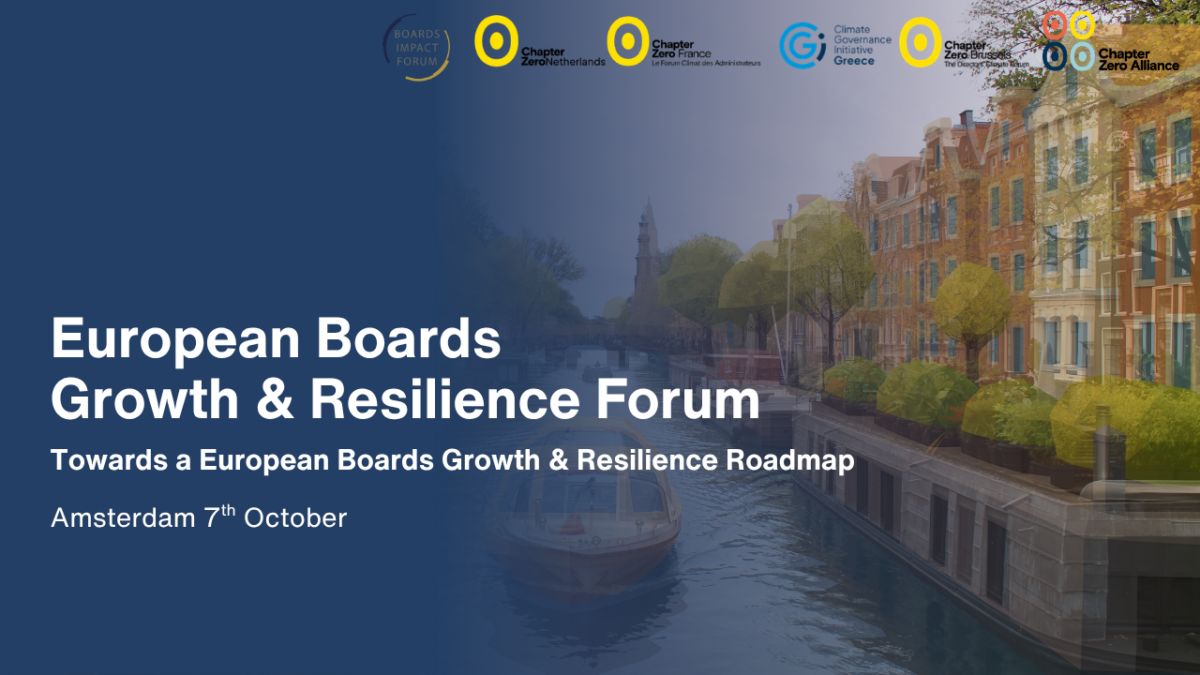
And do you want to meet Lars and other experienced board directors and discuss current and cirtical board questions; On 7 October 2026 in Amsterdam, the European Boards Growth & Resilience Forum brings together non-executive and supervisory directors from across Europe to explore how boards can strengthen European competitiveness, resilience and long-term value creation.
Through confidential peer exchange and working sessions, directors will connect geopolitical shifts, sustainability, AI and technology with the strategic choices facing their companies. Insights from the Forum will also contribute to the European Boards Growth & Resilience Roadmap, planned for publication in early 2027.
the European Boards Growth & Resilience Forum
Navigating Uncertainty Leadership Renewal Journey
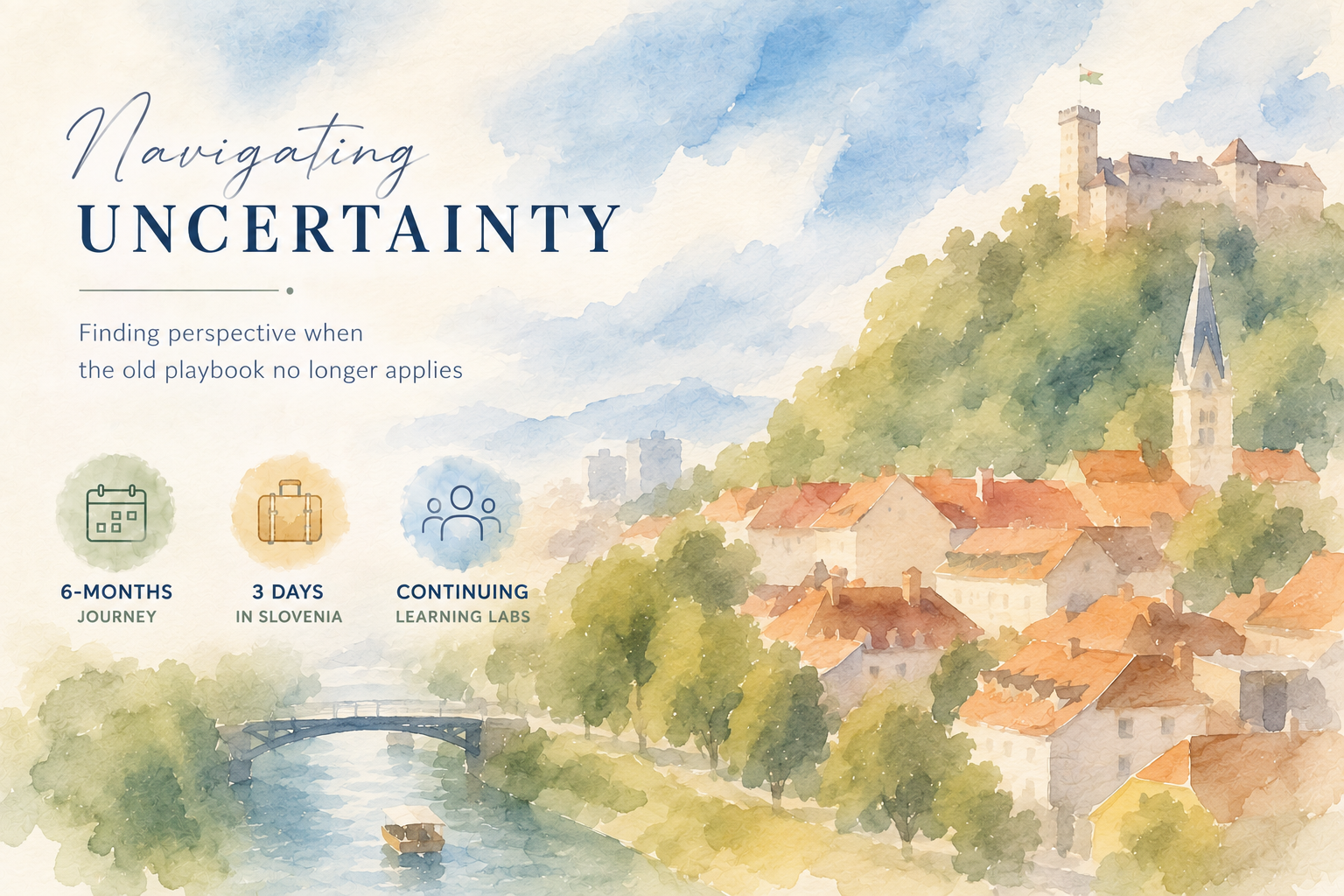
If these questions resonate, Navigating Uncertainty offers an opportunity to explore them more deeply.
This six-month executive learning journey combines coaching, dialogue, art, place and reflection to strengthen four distinctly human capabilities for uncertain environments: seeing, reframing, adapting and renewing.
Explore Navigating Uncertainty and the 2026–2027 cohort
Boards Oversight of Responsible AI for Value Creation
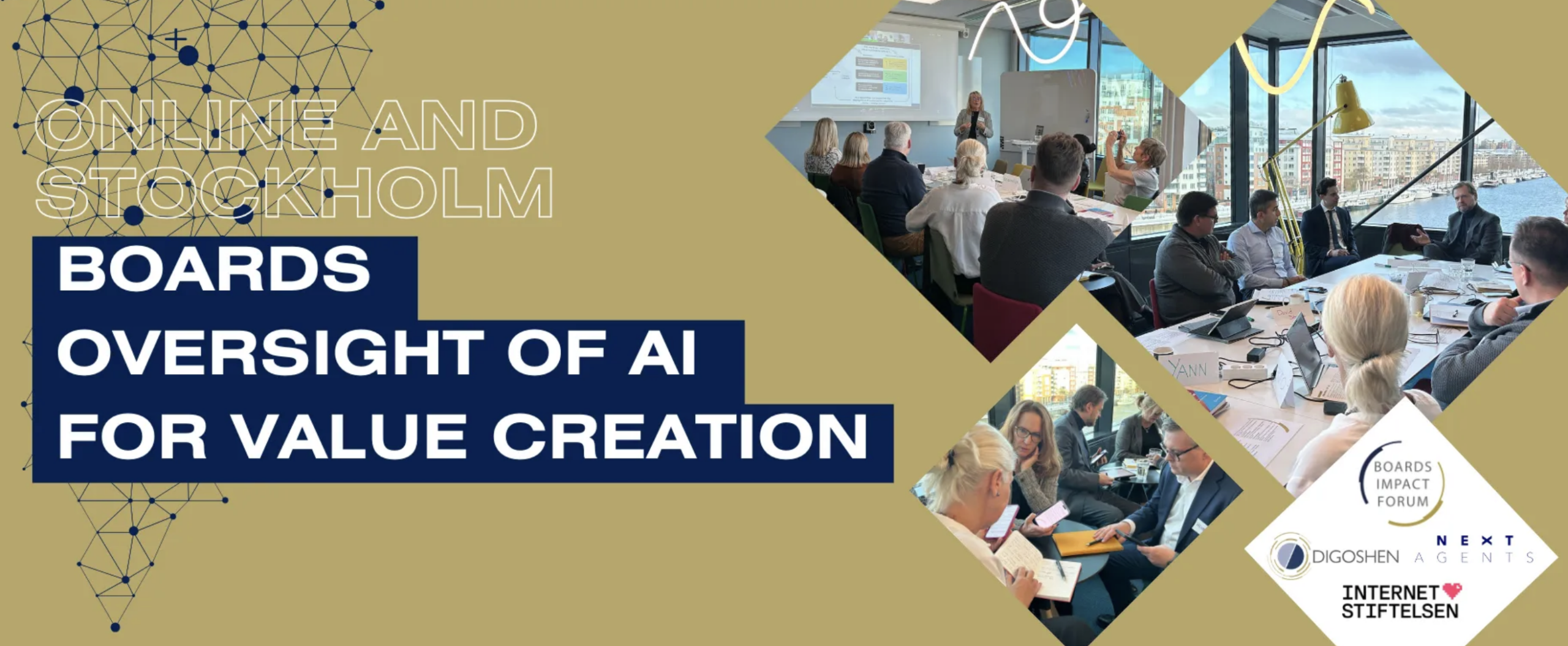
For board members who want to move from reading and discussion to direct experience, the Boards Oversight of Responsible AI for Value Creation — October 2026 Cohort offers a practical learning journey for chairs, non-executive directors, corporate secretaries and senior leaders who want to understand AI from the board’s perspective.
Explore Boards Oversight of Responsible AI for Value Creation
References and further reading
INSEAD – Annie Peshkam & David Dubois, “How Leaders and Teams Can Unlearn Together.” Read at INSEAD Knowledge
Harvard Business Review – Annie Peshkam, “To Lead Through Uncertainty, Unlearn Your Assumptions.” Read at Harvard Business Review
MIT Sloan – Zach Church, “Writing a New Leadership Playbook.” Read at MIT Sloan
MIT CISR – Nils O. Fonstad & Jeanne W. Ross, “Learning How to Test and Learn.” Read at MIT CISR
Stanford Graduate School of Business – Lee Simmons, “How to Stay Ahead When the Rules Change.” Read at Stanford GSB
IESE – Yuliya Snihur, “How Did Barnes & Noble Survive the Threat of Amazon? It Was All About Opportunity Framing.”Read at IESE Insight
IMD – David Bach & Alarico Allegri, “The Rules of Global Business Are Being Rewritten. Leadership Must Evolve to Keep Pace.” Read at IMD
Stanford Graduate School of Business – Loren Mooney, “Is It Time to ‘Repot’ Your Career?” Read at Stanford GSB
IMD – Ben Bryant, Anouk Lavoie & Michelle Perrinjaquet, “Into the Moment: Mindful Leadership in an Adaptive Era.” Read at IMD
Harvard Business Review – Heather Cairns-Lee & Bill Fischer, “What’s Stopping You from Reinventing Your Career?”Read at Harvard Business Review
INSEAD Knowledge, “Why Open Innovation Often Fails to Scale.” Read at INSEAD Knowledge
MIT Sloan – Brian Eastwood, “5 Ways to Successfully Scale Digital Initiatives.” Read at MIT Sloan
About Digoshen

This blog post was originally published on the Digoshen blog and the personal blog of Digoshen founder Liselotte Engstam.
At Digoshen, we help leaders and boards navigate an increasingly complex world shaped by AI, digital transformation, sustainability, geopolitical change, and evolving workforce dynamics.
Through research, executive education, thought leadership, coaching, and international networks, we translate emerging trends into practical insights that strengthen leadership, governance, innovation, and long-term value creation. We believe that the future belongs to organizations that successfully combine technological intelligence with human wisdom.
If you are a board member, executive, or leader interested in shaping the future of your organization, we invite you to explore our articles, research, podcasts, learning programs, and international communities.
You are also welcome to discover the Boards Impact Forum, chaired by Digoshen founder Liselotte Engstam, and Novisali, her artistic practice exploring leadership, reflection, and human experience through art.
Find more insights on the Digoshen website, explore Liselotte Engstam’s research on Google Scholar, and follow Digoshen on LinkedIn.