
Leading Into the Fog
We often expect experienced leaders to know the way. Experience gives us patterns to recognise, frameworks to draw on and judgement built through situations encountered before. But what happens when several fundamental transitions unfold simultaneously — and interact in ways we have not experienced before?
Artificial intelligence is changing work, organisations and competitive advantage. Climate and nature are reshaping technologies, investment and business models. Geopolitical fragmentation and questions of sovereignty are challenging assumptions about markets, supply chains, technology and strategic dependencies. And through all of this, organisations still need to compete, innovate, grow and renew themselves.
These questions are part of the territory we explore with Steen Buchardt Jensen in the latest conversation in our Beyond the Old Playbook series.
As in other conversations in the series, we begin not with a management framework but with an artwork: André Derain — The Turning Road, L’Estaque (1906).

A recognisable landscape transformed through colour and perspective. A road moves through it, turns — and disappears from view.
The artwork does not provide an answer. It offers another way of entering the subject — a moment to look before analysing and perhaps notice something our familiar frameworks might otherwise cause us to overlook.
As we look towards 2030, perhaps the challenge is less about predicting precisely what lies ahead and more about developing our capacity to navigate while the landscape itself continues to change.
What capabilities will we need — individually and collectively — to lead and govern through transitions whose outcomes we cannot fully know?
When Several Transitions Become One Leadership Challenge

AI, climate and sovereignty are often treated as separate transformations. Yet the strategic decisions organisations face increasingly cut across all three.
An AI decision can simultaneously involve workforce, data, energy, cybersecurity, technology dependency and sovereignty. Climate choices increasingly affect resources, supply chains, capital allocation, innovation and competitiveness. Geopolitical fragmentation is forcing companies to reconsider where they produce, source, store data and build critical capabilities.
The challenge is therefore becoming systemic rather than functional.
This is particularly important as questions of sovereignty move onto corporate agendas. Complete self-sufficiency is neither realistic nor necessarily desirable. The more useful question may be one of resilient interdependence: which dependencies make us stronger, which create vulnerabilities, and where do we need alternatives or greater control?
These transitions also create difficult trade-offs. Greater sovereignty may improve resilience but increase costs. Faster AI adoption may strengthen competitiveness while introducing new workforce or dependency risks. Climate investments may require substantial capital today while creating tomorrow’s markets.
These questions cannot simply be delegated to specialists. Leaders and boards increasingly need to understand how the transitions interact and what they mean for the organisation as a whole.
From What We Know to How Well We Can Learn

This environment also changes the meaning of experience. Experience remains enormously valuable, but it can become a constraint when we assume that patterns that created success in one environment will continue to work in another.
Some challenges can be addressed through better analysis and known solutions. Others are genuinely adaptive: the direction may be clear, but the solution cannot be fully determined in advance. Research on organisational transformation shows how leadership teams can become trapped seeking more data, benchmarks and risk assessments when no amount of analysis can provide the certainty they want. In such situations, waiting for the complete roadmap may itself become a risk. The organisation needs enough clarity about direction and boundaries to begin moving — and then learn through action.
One of the defining capabilities for 2030 may therefore be remaining capable of learning when what we already know becomes insufficient.
This is not only an intellectual capability. Uncertainty, high stakes and incomplete information can trigger anxiety, defensiveness and a desire to regain control — precisely when leaders most need to recognise their own reactions and exercise judgement. Practical wisdom and self-awareness therefore matter alongside analytical capability.
These questions apply to executives and board members alike. AI makes this particularly visible. Leaders and directors do not need to become technologists, but they need enough direct understanding to recognise possibilities, challenge assumptions and exercise judgement. The same applies to climate transition and geopolitical fragmentation: they cannot be understood only through reports and dashboards.
The capability required looks less like accumulating a fixed body of expertise and more like a continuing cycle of sensing, questioning, exploring, judging, acting, learning and adapting.
Experience remains essential. But instead of providing the answer, it becomes a foundation from which to ask better questions.
From Capable Individuals to Collective Intelligence

Individual capability is only half the challenge. Organisations understandably respond to complexity by seeking additional expertise: AI, climate, cybersecurity, geopolitics. Boards similarly reconsider their composition and skills matrices. But a collection of capable individuals does not automatically create a capable collective.
The challenges ahead cross disciplinary boundaries. The technology expert may understand AI but not all its organisational consequences. The climate specialist may understand transition pathways but not their full commercial implications. The geopolitical expert may recognise dependencies that look very different through the eyes of a technology or business leader.
The critical capability therefore lies partly in what happens between people. Can a leadership team combine different perspectives rather than simply divide responsibility among specialists? Can assumptions be challenged without disagreement becoming personal? Can the group stay with uncertainty long enough to understand a problem before reaching for a familiar answer?
The same applies to boards. Composition matters, but so do the quality of dialogue, time for strategic discussion, the role of the chair, constructive challenge and the relationship between board and CEO.
This leaves us with four interconnected levels: the individual leader, the leadership team, the individual board member and the board as a collective. Each needs to develop, but so does the relationship between them.
As uncertainty increases, management cannot always be expected to arrive in the boardroom with perfectly formed answers for directors simply to approve or reject. At the same time, the board should not move into management. The challenge is to create a relationship in which leadership and the board can examine assumptions, alternatives and emerging signals together while preserving their different responsibilities.
The question becomes whether leadership and governance together can create greater collective intelligence than any of the individuals involved could provide alone.
Resilience Is Not Enough

When uncertainty increases, organisations naturally strengthen controls, governance, reporting and redundancy. Much of this is necessary. But it can also turn AI primarily into a risk programme, climate into a compliance programme and sovereignty into a protection programme. A company can become more resilient while becoming less entrepreneurial.
The challenge for leaders and boards is therefore to govern downside risk while continuing to search for upside possibility. This may also require a different understanding of strategy. Rather than a fixed plan built around assumptions that may quickly change, strategy becomes a continuing search for opportunity — repeatedly testing whether the organisation is pursuing the right possibilities and building the capabilities needed to capture them. Speed, optionality and resilience become important not instead of direction, but as ways of pursuing it under uncertainty.
Are we using AI primarily to make today’s organisation more efficient, or also to imagine tomorrow’s business? Are we treating climate transition principally as an obligation, or exploring how it changes markets and sources of competitive advantage? Are we responding to geopolitical fragmentation only by reducing exposure, or also reconsidering where new opportunities might emerge?
This tension is central to the intent behind the European Boards Growth & Resilience Roadmap: exploring how leadership and governance can contribute not only to resilience but also to competitiveness, renewal and long-term value creation as AI, climate and sovereignty reshape the business environment.
It also makes the idea of the Board of 2030 interesting beyond the boardroom itself. The question is not simply which competencies future boards will need. It is whether our models of leadership and governance are evolving quickly enough for the environment they will need to navigate.
That requires holding together things that can easily become separated: resilience and growth, risk and opportunity, responsibility and experimentation, sovereignty and interdependence, oversight and renewal, experience and curiosity.
The artwork with which the conversation with Steen began remains in the background of these questions — not as an answer, but as an invitation to look differently.
We cannot know precisely what the world on the other side of today’s transitions will look like. Nor should we discard the experience and knowledge that brought us this far. But we may need to become better at recognising when the landscape has changed, questioning what we think we know, and learning while moving.
Perhaps being ready for 2030 is less about knowing what the future will be, and more about becoming capable — individually and collectively — of navigating whatever it becomes.
A Conversation with Steen Buchardt Jensen
In the latest episode of Beyond the Old Playbook, Steen Buchreitz Jensen joins us to explore what leadership requires when experience and established frameworks can no longer provide all the answers.

Steen is the founder of Scandinavian Executive Institute, which develops executive leadership and board programmes in collaboration with INSEAD. He is also a member of the Supervisory Board and Steering Committee of Boards Impact Forum, bringing together his work with executive development, boards and governance.
We discuss what changes when leaders face genuine uncertainty, the role of experience and judgement, and how we can continue learning while moving rather than waiting until the path becomes clear.
At its heart is a question relevant to leaders, leadership teams, board members and boards alike: How do we move forward when the old playbook no longer provides the answer?
This conversation is part of the nine-part Beyond the Old Playbook series, featured in the Exploring Leaders Podcast by Digoshen.
On Youtube
– YouTube
Enjoy the videos and music you love, upload original content, and share it all with friends, family, and the world on YouTube.
On Spotify
Steen Buchreitz Jensen shares how leaders and boards can navigate uncertainty through curiosity, judgement and continuous learning.
Listen to this episode from Exploring Leaders by Digoshen on Spotify.
Connect with Steen Buchreitz Jensen
From exploring to experiencing
European Boards Growth & Resilience Forum
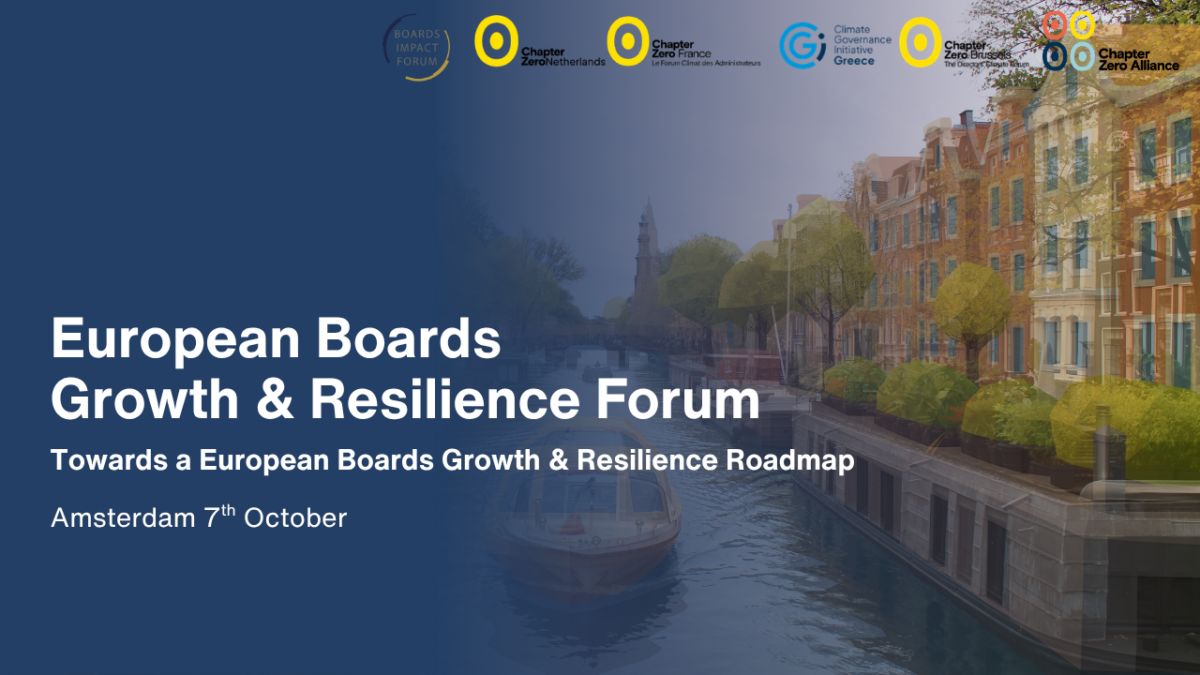
And do you want to meet Lars and other experienced board directors and discuss current and cirtical board questions; On 7 October 2026 in Amsterdam, the European Boards Growth & Resilience Forum brings together non-executive and supervisory directors from across Europe to explore how boards can strengthen European competitiveness, resilience and long-term value creation.
Through confidential peer exchange and working sessions, directors will connect geopolitical shifts, sustainability, AI and technology with the strategic choices facing their companies. Insights from the Forum will also contribute to the European Boards Growth & Resilience Roadmap, planned for publication in early 2027.
Explore the European Boards Growth & Resilience Forum
Boards Oversight of Responsible AI for Value Creation
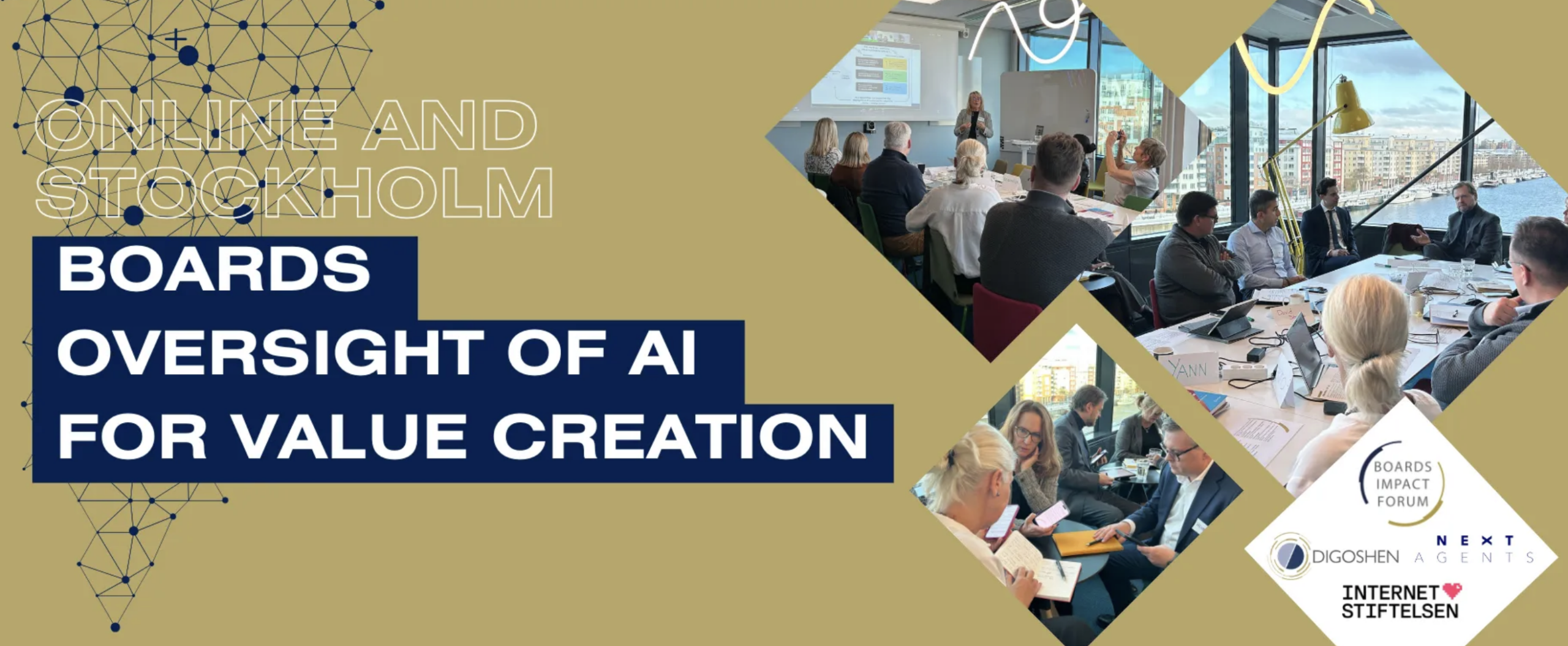
For board members who want to move from reading and discussion to direct experience, the Boards Oversight of Responsible AI for Value Creation — October 2026 Cohort offers a practical learning journey for chairs, non-executive directors, corporate secretaries and senior leaders who want to understand AI from the board’s perspective.
Explore Boards Oversight of Responsible AI for Value Creation
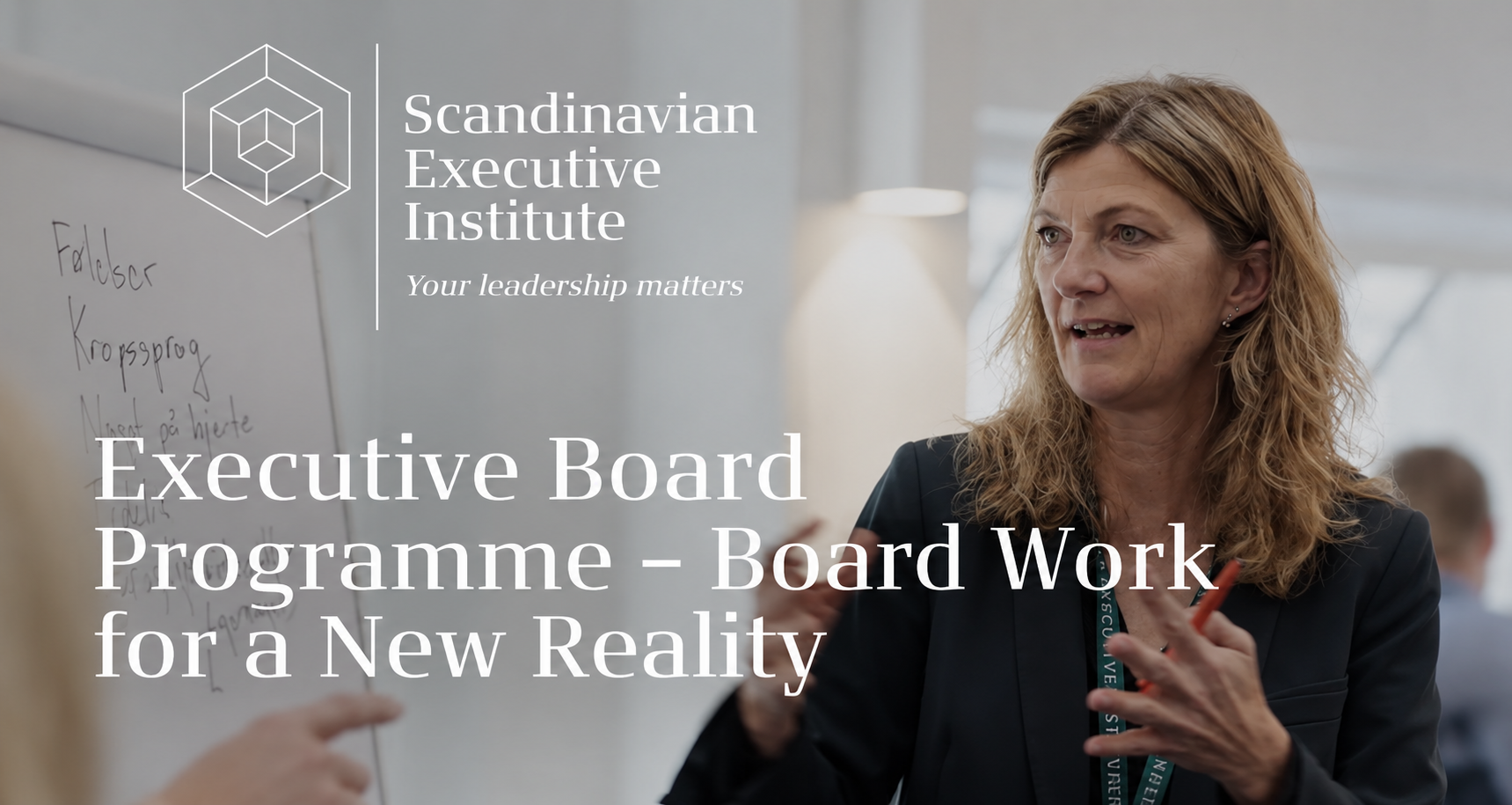 The Executive Board Programme – Board Work for a New Reality, run by the Scandinavian Executive Institute in collaboration with INSEAD, is designed for experienced and aspiring board members navigating a business landscape shaped by technological, geopolitical and societal change. The programme combines leading governance perspectives, practical application and peer exchange to explore how boards can strengthen strategic judgement, create value and lead effectively in a new reality.
Executive Board Programme – Board Work for a New Reality
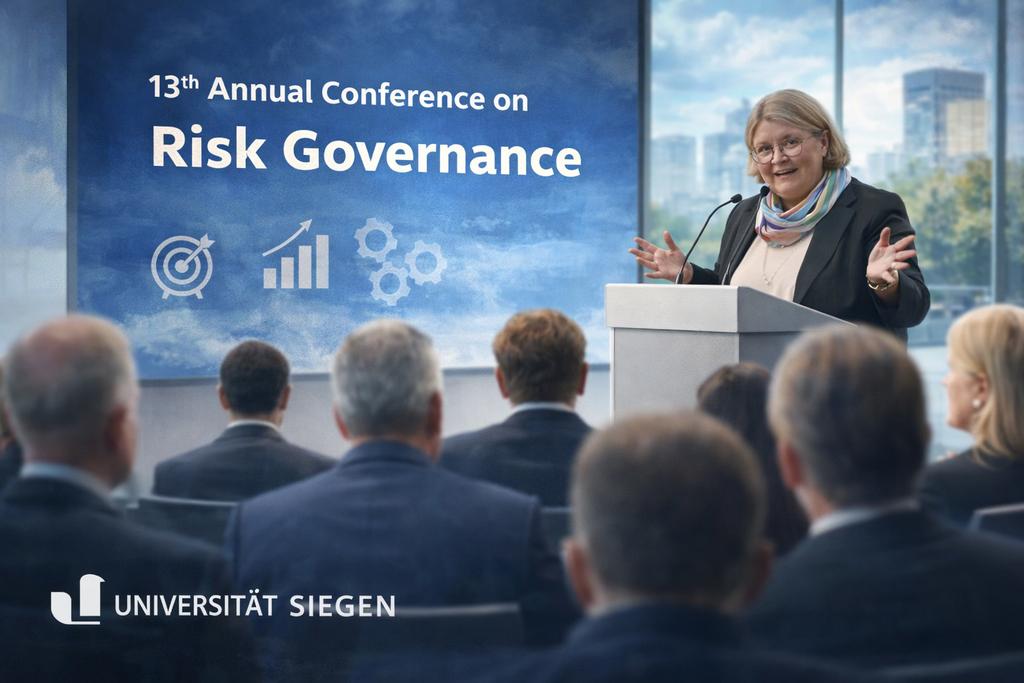
Explore Annual Global Conference on Risk Governance
References & Further Reading
INSEAD — Leading Organisational Change Without a Roadmap, Chengyi Lin & Michael Y. Lee, 2026
INSEAD — Leading in the Age of Anxiety, Graham Ward & Anindo Bhattacharjee, 2026
INSEAD — Your Strategy Is a Flashlight, Not a Business Plan, Andrew Shipilov, 2026
INSEAD — AI and Career Reinvention, Sameer Hasija & Winnie Jiang, 2026
INSEAD Corporate Governance Centre & KPMG — AI Governance Principles for Boards
IESE — Corporate Governance in a Context of Disruption: 2026 Survey of Boards of Directors
Stanford Directors’ College — Artificial Intelligence: Board Use and Governance
IMD — Geopolitics for Boards
McKinsey & Company — How Companies Can Strengthen Their Geopolitical Risk Readiness
BCG — For Most Countries, AI Sovereignty Is an Illusion. Resilience Is Real
PwC — Board Oversight of AI Transformation
Deloitte, World Economic Forum and Chapter Zero Alliance – Board Leadership for Growth and Resilience: Guiding Principles for Climate and Nature Governance
About Digoshen

This blog post was originally published on the Digoshen blog and the personal blog of Digoshen founder Liselotte Engstam.
At Digoshen, we help leaders and boards navigate an increasingly complex world shaped by AI, digital transformation, sustainability, geopolitical change, and evolving workforce dynamics.
Through research, executive education, thought leadership, coaching, and international networks, we translate emerging trends into practical insights that strengthen leadership, governance, innovation, and long-term value creation. We believe that the future belongs to organizations that successfully combine technological intelligence with human wisdom.
If you are a board member, executive, or leader interested in shaping the future of your organization, we invite you to explore our articles, research, podcasts, learning programs, and international communities.
You are also welcome to discover the Boards Impact Forum, chaired by Digoshen founder Liselotte Engstam, and Novisali, her artistic practice exploring leadership, reflection, and human experience through art.
Find more insights on the Digoshen website, explore Liselotte Engstam’s research on Google Scholar, and follow Digoshen on LinkedIn.