
Why navigating uncertainty can also be an opportunity to reconsider what comes next
When the world changes faster than our assumptions, experience can become both an advantage and a constraint. Experienced leaders become good at recognising patterns. They have seen situations before, learned what works and developed ways of interpreting what is happening around them. But what happens when the patterns themselves begin to change?
Sometimes the challenge is not that information is lacking, but that new realities are interpreted through familiar lenses. Experience helps us recognise patterns, but it can also reinforce assumptions and create blind spots.
This is the question explored with Lidija Drobež in a new conversation in the Beyond the Old Playbook podcast series:
How do we change perspective when the old way of seeing no longer serves us?

The conversation begins with René Magritte’s The False Mirror. Painted in 1929, it presents a giant eye filled with an open sky and clouds—a reminder that seeing is never entirely neutral. What we notice is influenced by what we expect, what we have experienced and the assumptions we bring with us. This matters particularly in periods of uncertainty. When familiar reference points disappear, the instinct can be to seek more information, more analysis and greater certainty. Yet sometimes what is needed is the ability to question the lens itself.
Writing in Harvard Business Review, Simone Stolzoff argues that tolerance for uncertainty is becoming a core leadership skill. Rather than trying to eliminate uncertainty, leaders can become better at operating within it by anchoring themselves in enduring values and priorities, experimenting rather than over-planning, and learning to approach uncertainty differently.
Changing perspective can change the possibilities that become visible. A threat may also contain an opportunity. A constraint may invite experimentation. Something long regarded as essential may no longer be. And this applies not only to leadership challenges, but also to how experienced professionals choose to engage with the years ahead.
Navigating uncertainty—and reconsidering the portfolio
For many experienced leaders and professionals, the future may be less defined by one role or a linear career path. It may increasingly involve an evolving combination of executive responsibilities, board roles, advisory work, entrepreneurship, learning, creative pursuits, community contribution and personal priorities.
At the same time, the nature of those engagements is changing. AI is reshaping how work is organised and where distinctly human capabilities create value. A recent Harvard Business Review article by Faisal Hoque, Tom Davenport and Paul Scade argues that the more important question may not simply be which roles AI replaces, but how work can be redesigned around the complementary strengths of people and technology.
This makes uncertainty a useful moment for reflection. The question is no longer only “How should this uncertainty be navigated?” but also “Where is time, energy and experience best invested for the future?”
Seeing differently also has a collective dimension. Boards and leadership teams, like individuals, can develop established assumptions about markets, risks, opportunities and what the future is likely to hold. In periods of significant change, renewal may depend not only on making better decisions, but on questioning the perspectives through which those decisions are made
 The Stanford Center on Longevity offers an interesting perspective through the concept of a Purpose Portfolio: rather than attaching purpose to a single job or role, thinking about a portfolio of activities and commitments that can evolve and be periodically rebalanced as circumstances and priorities change.
This idea need not be reserved for retirement or a major career transition. Does the portfolio of engagements that made sense in the past still reflect what deserves time, energy and experience in the years ahead?
Some engagements may deserve greater attention and others less. New interests may deserve room to develop. Experience accumulated in one context may create value somewhere new. The point is not to design a perfect new configuration, but to experiment and evolve.
In this sense, renewal is not necessarily about starting again. It can be about becoming more intentional about what to carry forward, what to make room for and what to reconsider.
Creating distance to see new possibilities
Changing perspective rarely happens simply because someone decides to think differently. An unfamiliar environment can create distance from everyday routines. Conversations with people from different backgrounds can expose assumptions. Art can invite interpretations that analytical thinking alone may not reveal. Slowing down can create room for questions that rarely fit into a crowded calendar.
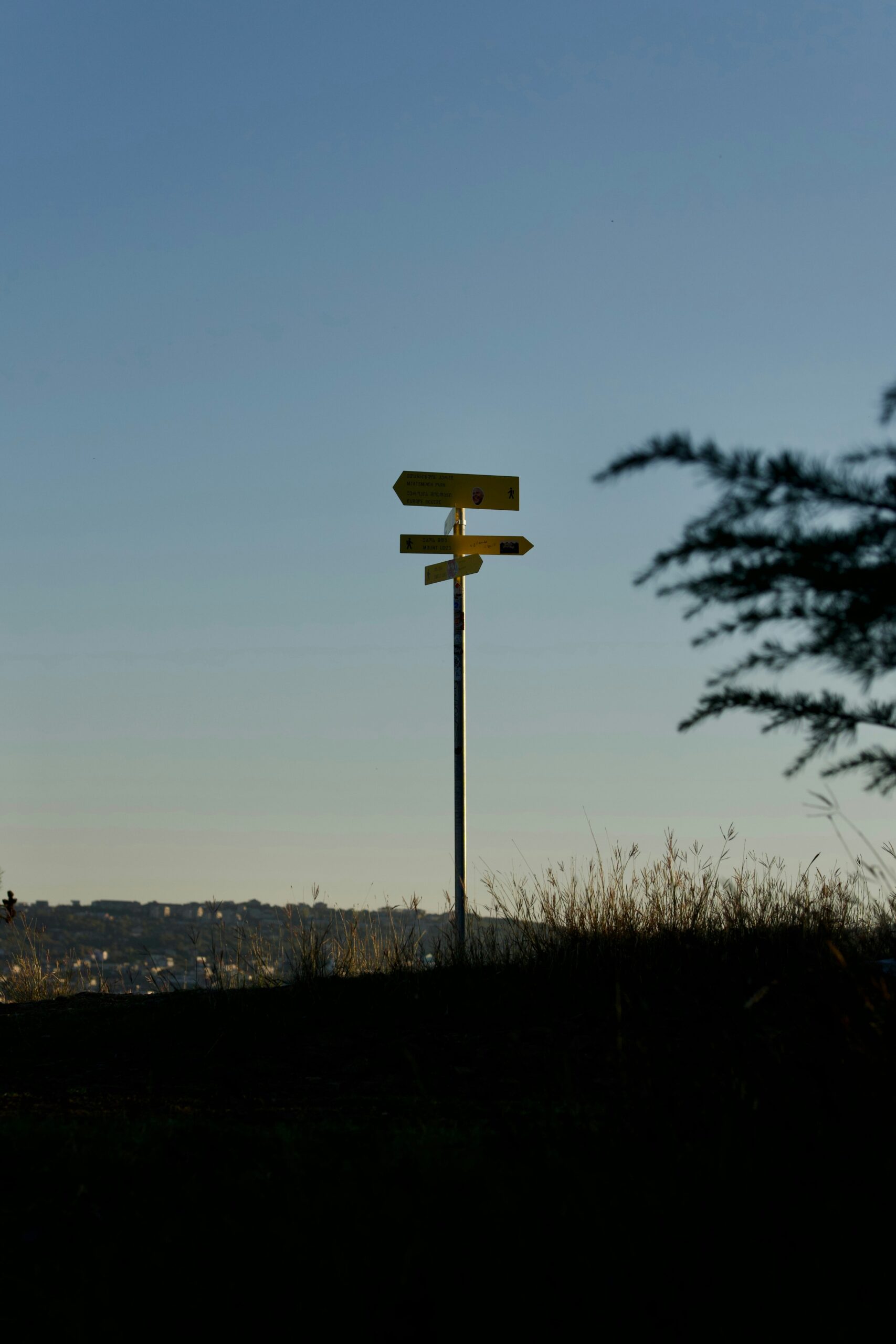
These ideas are at the heart of Navigating Uncertainty, a learning journey led by Lidija Drobež and Liselotte Hägertz Engstam in Ljubljana this autumn. Through the city, art, perception, dialogue and reflection, participants are invited outside familiar ways of thinking and encouraged to connect new perspectives to their own questions and transitions.
The journey develops four interconnected capabilities: Seeing, recognising patterns and possibilities that might otherwise be overlooked; Reframing, questioning assumptions and discovering new ways forward; Adapting, moving without complete certainty through experimentation and curiosity; and Renewing, maintaining perspective and resilience while making more intentional choices about where to invest time, energy and experience.
Creating space to see differently matters collectively too. When board members come together across companies, industries and perspectives, the value lies not only in exchanging knowledge, but in challenging established assumptions and exploring how others are interpreting the changes ahead. This is also part of the thinking behind the European Boards Growth & Resilience Forum, where board leaders come together to consider the shifts shaping growth and resilience from different perspectives.
In both settings, the purpose is not simply to encounter new ideas. It is to create conditions for seeing differently—and then choosing more intentionally.
What deserves a place in the next chapter?
Navigating uncertainty is not only about becoming better at responding to what happens around us. It can also create an opportunity to become more intentional about what to move towards.
As the external landscape changes, it may be worth looking at one’s own portfolio with fresh eyes. Which engagements still deserve energy? Where can accumulated experience make the greatest contribution? What is worth learning or experimenting with? And what might be ready to be reshaped or left behind?
The latest Beyond the Old Playbook conversation, Seeing What We Couldn’t See Before, leaves listeners with one question:
What assumptions might be shaping the way you see your most important challenge today?
Perhaps another is worth adding:
If you looked at your portfolio of engagements with fresh eyes, what might you want to shape differently for the future?
Listen to the conversation
Listen to Seeing What We Couldn’t See Before →
On Youtube
Lidija Drobež, business leader & coach, shares how changing perspective can reveal possibilities.
Lidija Drobež, experienced business leader and executive coach, explores how experience can be both a strength and a limitation when navigating change. Drawing on leadership practice, art, and reflection, she examines how assumptions shape what we see-and how slowing down, questioning familiar perspectives, and looking through different lenses can open up new possibilities.
On Spotify
A conversation with Lidija Drobež

Lidija Drobež combines international leadership experience, executive coaching, and the arts. After a successful corporate career, she has spent more than 25 years supporting leaders and organizations through change, uncertainty, and reinvention.
As founder of Galleria l’arte di seta and a Fellow of the Institute of Coaching at Harvard Medical School, she integrates coaching, creativity, and reflective practice to help leaders expand their perspectives and discover new possibilities. Connect with Lidija Drobez at Linkedin
Explore Further
Leaders, It’s Time to Build Your Tolerance for Uncertainty — Simone Stolzoff, Harvard Business Review, 2026
Explores uncertainty tolerance as a leadership capability and how values and priorities, experimentation and a different relationship with uncertainty can help leaders move forward when the future cannot be predicted.
Create a Purpose Portfolio — Stanford Center on Longevity
Introduces the idea of treating purpose as an evolving portfolio rather than attaching it to a single role, considering how different activities, interests, relationships and forms of contribution can evolve and be periodically reconsidered.
AI Transformation Requires Redesigning Work, Not Cutting Roles — Faisal Hoque, Tom Davenport and Paul Scade, Harvard Business Review, 2026
Explores how AI may reshape work around the complementary strengths of humans and technology—adding another reason to reconsider where human judgement, experience and contribution can create value in the future.
From exploring to experiencing
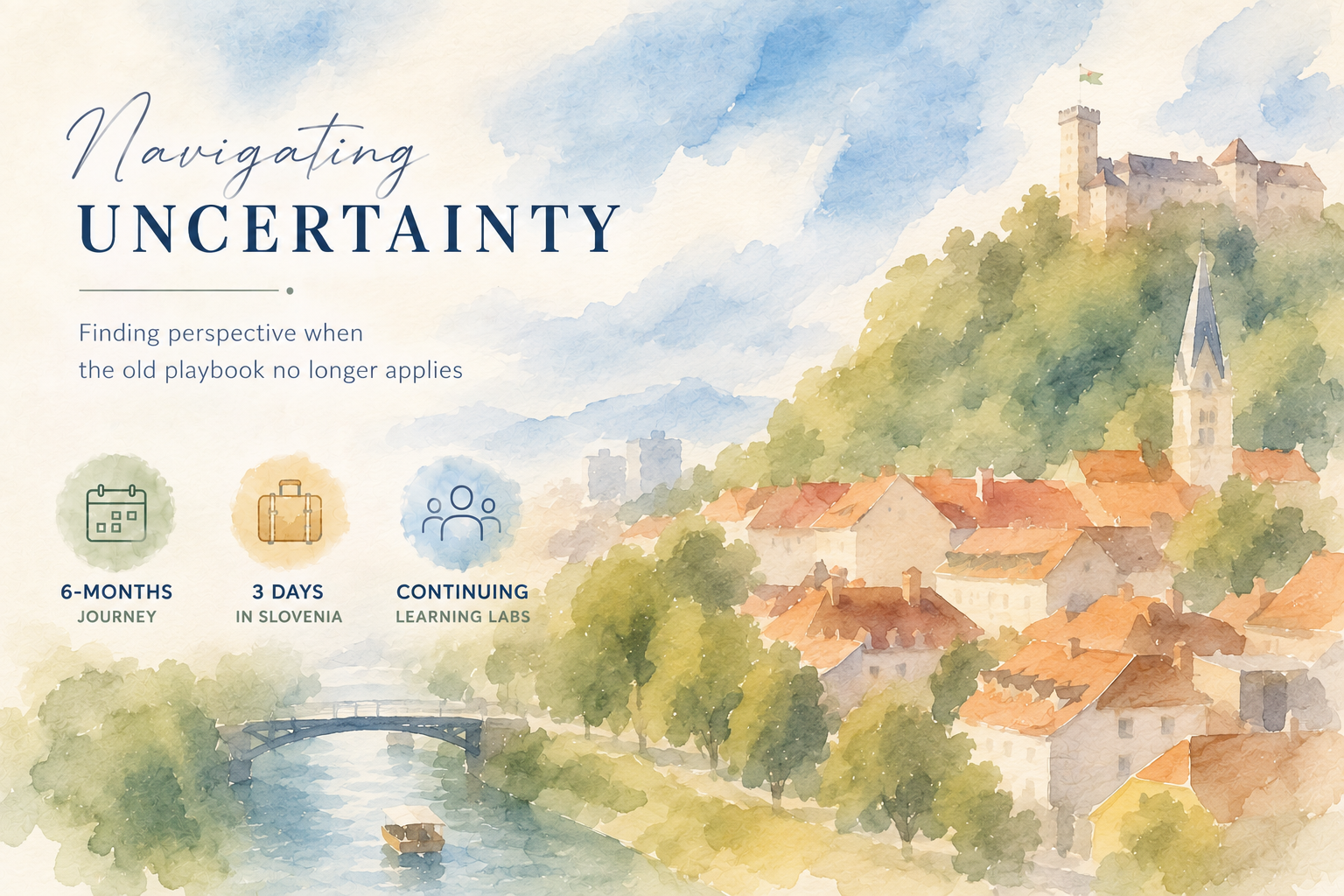
Navigating Uncertainty Journey
The Navigating Uncertainty — Finding Perspective When the Old Playbook No Longer Applies journey offers an opportunity to create space for these questions. It begins with three immersive days in Ljubljana, 22–24 October 2026, with preparation beforehand. Insights are translated into a Personal Navigation Map of practical experiments, priorities and commitments. The journey then continues through three Learning Labs, providing opportunities to reflect, experiment, adapt and revisit those priorities over the following months.
Explore Navigating Uncertainty and the 2026–2027 cohort
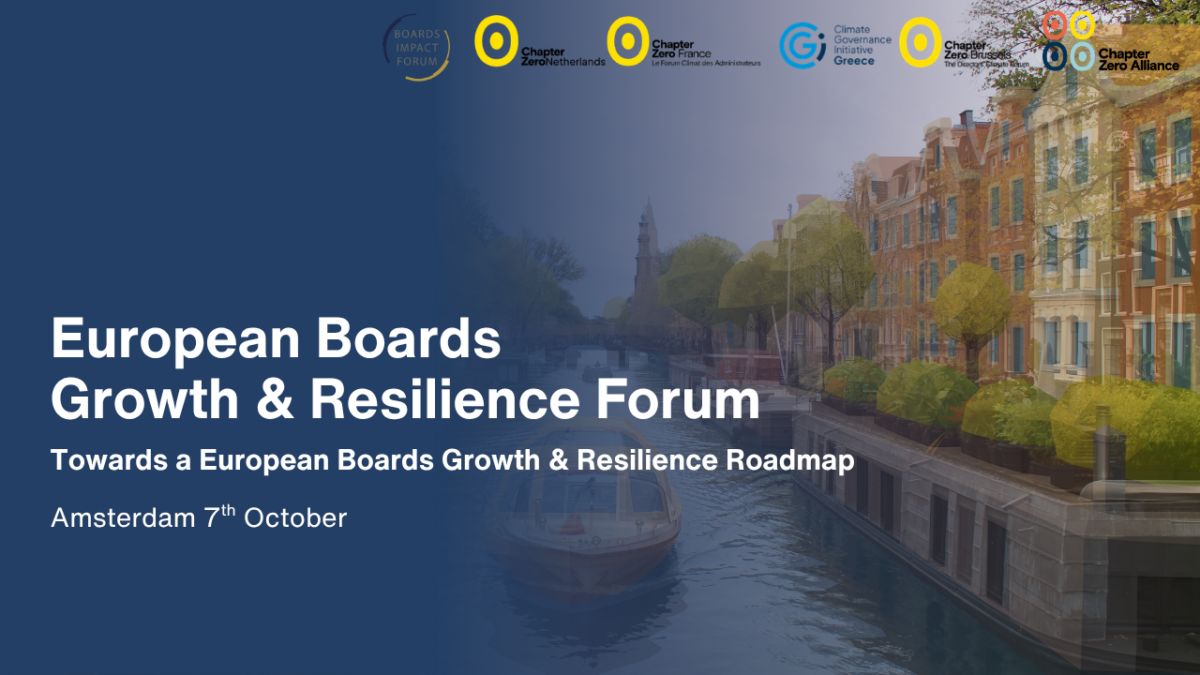
European Boards Growth & Resilience Forum
These same shifts are also reshaping the questions facing boards and organisations. The European Boards Growth & Resilience Forum, taking place in Amsterdam on 7 October, will explore how boards can navigate the intersecting forces of AI, sustainability and geopolitical change while strengthening resilience, competitiveness and long-term value creation.
Explore the European Boards Growth & Resilience Forum
About Digoshen

This blog post was originally published on the Digoshen blog and the personal blog of Digoshen founder Liselotte Engstam.
At Digoshen, we help leaders and boards navigate an increasingly complex world shaped by AI, digital transformation, sustainability, geopolitical change, and evolving workforce dynamics.
Through research, executive education, thought leadership, coaching, and international networks, we translate emerging trends into practical insights that strengthen leadership, governance, innovation, and long-term value creation. We believe that the future belongs to organizations that successfully combine technological intelligence with human wisdom.
If you are a board member, executive, or leader interested in shaping the future of your organization, we invite you to explore our articles, research, podcasts, learning programs, and international communities.
You are also welcome to discover the Boards Impact Forum, chaired by Digoshen founder Liselotte Engstam, and Novisali, her artistic practice exploring leadership, reflection, and human experience through art.
Find more insights on the Digoshen website, explore Liselotte Engstam’s research on Google Scholar, and follow Digoshen on LinkedIn.