
Insights from the 2025 Nobel Prize in Economics for Leaders and Boards
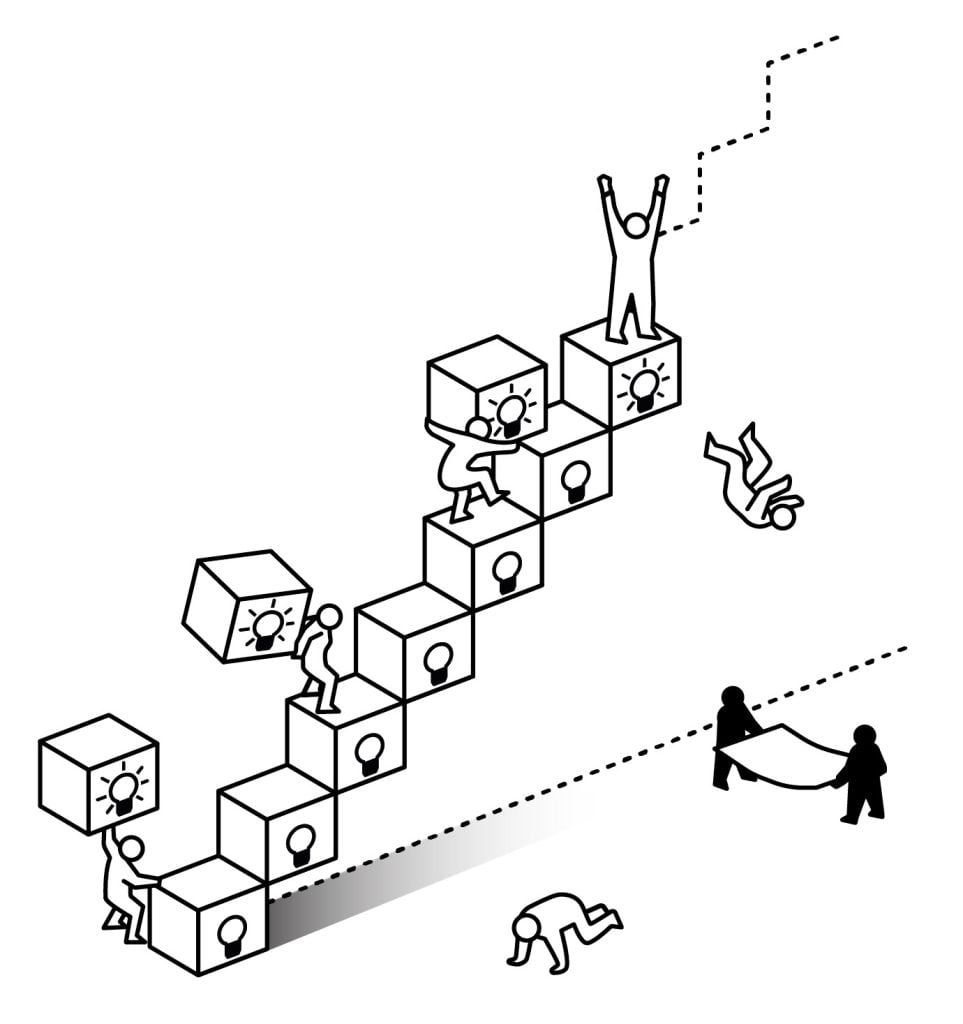
Each year, the Nobel Prize in Economic Sciences honors discoveries that help us understand the forces shaping progress.
The 2025 prize, awarded to Philippe Aghion, Peter Howitt, and Joel Mokyr, offers profound lessons on how societies and organizations sustain renewal. The Nobel Laureate Philippe Aghion, is Professor at INSEAD, at the Collège de France, Visiting Professor London School of Economics and Harvard, Peter Howitt is Professor Emeritus Brown University and Joel Mokyr is Professor, Northwestern University. Their research reveals how growth depends on the dynamic process of creative destruction — where innovation replaces the old — and on the human and institutional capacity to navigate that change.
This message resonates deeply with the Inner Development Goals Summit 2025 and its theme, “Bridging Polarities.”
Because while the Nobel work describes the mechanics of renewal, the IDG framework explores the mindset that allows it — the inner skills leaders need to bridge tensions between stability and disruption, tradition and innovation, efficiency and exploration.
From Stagnation to Sustained Renewal
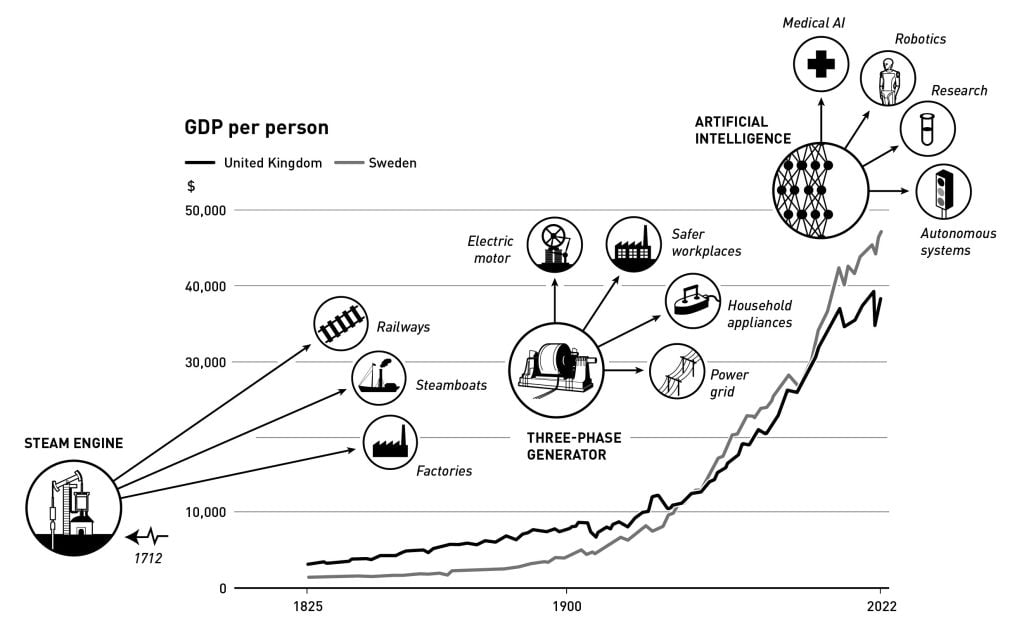
For most of history, economic life was static. Then, a few centuries ago, something extraordinary happened: innovation began to feed on itself.
Mokyr traced how scientific understanding (“why”) merged with practical know-how (“how”), igniting an era of continuous invention.
Aghion and Howitt built the economic model that explained it — showing that progress emerges from a delicate balance between competition and cooperation, incentive and regulation, freedom and fairness.
Their findings reveal that:
- Innovation thrives when new entrants can challenge incumbents.
- Temporary monopolies (such as patents) can stimulate R&D — but too much dominance stifles renewal.
- Knowledge spillovers make R&D socially valuable, calling for public support.
- Resistance to change — by vested interests or rigid systems — can halt progress for generations.
Listen to Introductions to 2025 Nobel Prize in Economics
Their insights are not only theoretical — they describe what’s at stake today.
As AI, climate transitions, and geopolitical fragmentation reshape our world, the same forces that once fueled progress risk turning inward.
According to the AXA Future Risks Report 2025,
-
95% of experts and 93% of citizens believe crises have increased in recent years,
-
Fragmentation and social cohesion have risen to the top global risk, and
-
Only 11–14% of experts believe public authorities are prepared for emerging challenges such as AI or climate adaptation.
The system that once created progress is now strained by distrust, inequality, and institutional fatigue.
The Inner Bridge: From Creative Destruction to Conscious Renewal
The IDG 2025 theme — Bridging Polarities — reminds us that growth and transformation are not only economic processes but deeply human ones.
Leaders and boards today must navigate paradoxes:
- Stability ↔ Change
- Efficiency ↔ Exploration
- Profit ↔ Purpose
- Control ↔ Trust
- Speed ↔ Reflection
These polarities cannot be solved once and for all — they must be bridged continuously through awareness, dialogue, and balance.
This is where the IDG framework becomes crucial: it builds the inner capacities that make sustainable progress possible — presence, humility, courage, compassion, and systemic awareness.
Just as the Nobel laureates showed that innovation requires openness to disruption, the IDG Summit reminds us that this openness must be cultivated within ourselves before it can shape our organizations.
Liste to Introductions to Inner Development Goals Summit 20205 – Bridging Polarities

Five Invitations for Boards and Leaders
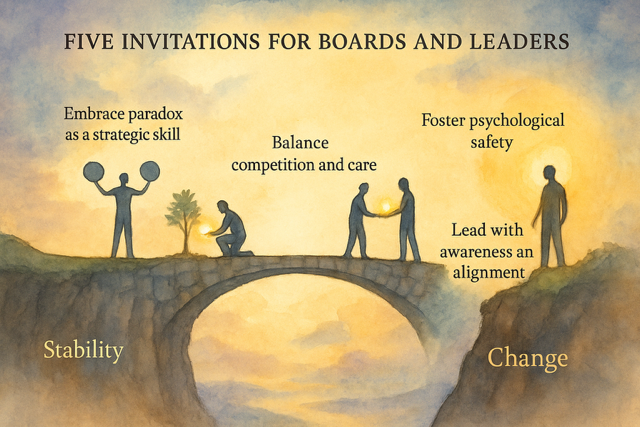
- Embrace paradox as a strategic skill – Innovation requires holding tensions rather than prematurely resolving them.
- Champion ecosystems of learning – Encourage R&D, experimentation, and continuous skill renewal across all levels.
- Balance competition and care – Ensure systems reward innovation without neglecting fairness and inclusion.
- Foster psychological safety – Boards and leaders must make space for honest reflection, dissent, and creative risk-taking.
- Lead with awareness and alignment – Anchor outer transformation (AI, digitalization, sustainability) in inner clarity and shared purpose.
Bridging for the Future
The 2025 Nobel laureates reveal that progress thrives on creative destruction — but without thoughtful stewardship, it becomes destructive rather than creative.
The 2025 IDG Summit theme calls us to develop the inner balance to guide innovation wisely.
And the AXA Future Risks Report shows that fragmentation, fear, and inequality are already testing that balance on a global scale.
Together, these three lenses — economic insight, inner development, and global risk perception — offer one shared truth:
Future resilience depends on our ability to bridge polarities — between action and reflection, competition and care, intelligence and wisdom.
It is a call to boards and leaders to bridge not only economic and social divides, but also the inner divides between fear and curiosity, control and trust, knowing and not knowing.
Reflection Question:
How can your leadership or board intentionally bridge the polarities of stability and change — ensuring that innovation and integrity, speed and reflection, coexist in your organization’s renewal journey?
Further Reading:
Nobel Prize in Economic Sciences 2025 – Popular Information nobelprize.org/prizes/economic-sciences/2025/popular-information
Inner Development Goals Summit 2025 – Bridging Polarities innerdevelopmentgoals.org/events/summit2025/
AXA Future Risks Report 2025 axa.com/en/future-risks-report-2025
Join Boards Impact forums Upcoming Event for Board Members;
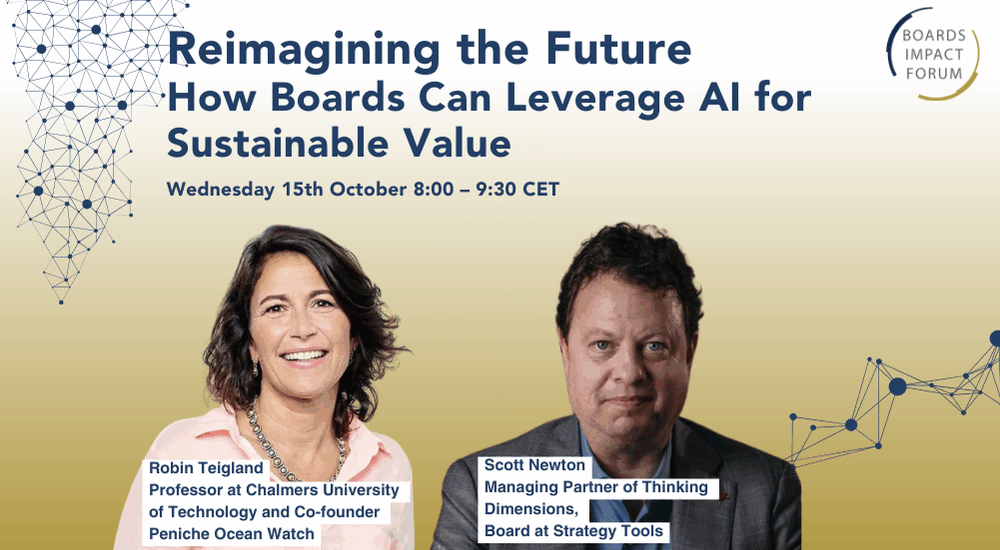
October 15 8-9.30 CET – Reimagine the Future
About Digoshen
This blog post was originally shared at the blog of Digoshen www.digoshen.com, the blog of Boards Impact Forum www.boardsimpactforum.com and the blog of the Digoshen founder www.liselotteengstam.com,
At Digoshen, we work hard to increase #futureinsights and help remove #digitalblindspots and #sustainabilityblindspots. We believe that Companies, Boards, and Business Leadership Teams need to understand more about the future and the digital & sustainable world to fully leverage the potential when bringing their business into the digital & more sustainable age. If you are a board member, consider joining our international board network and master programs.
Welcome to also explore the Digoshen Chatbot on AI Leadership for Boards and Boards Impact Forum, where the Digoshen Founder is the Chair.
Find a link to Digoshen Chair Liselotte Engstam Google Scholar Page and how the Digoshen Chair have contributed to AI Value Creation.
You will find more insights via Digoshen Website, and you are welcome to follow us on LinkedIn Digoshen @ Linkedin