

A country is not digitally sovereign because its citizens are advanced consumers of technology. Digital sovereignty depends on how much of the digital backbone is under a nation’s own control — its data, its infrastructure, and its tools — all governed by its own laws and aligned with its own values.
At its core, digital sovereignty means the ability to decide, independently, how a society manages and governs its digital infrastructure and intelligence. It is about controlling the lifelines of the modern economy: servers, data flows, communication systems, and increasingly artificial intelligence. Without this, even the most technologically advanced nations risk dependency on others for critical services, knowledge, and security.
The Digital Sovereignty Index (DSI) offers one of the first comparative snapshots of this independence. By scanning for self-hosted servers that support collaboration, communication, and productivity, the DSI reveals how much different countries rely on their own digital infrastructure rather than global tech giants. It is, in short, a mirror of how free a society really is in the digital domain.
What the Digital Sovereignty Index Reveals
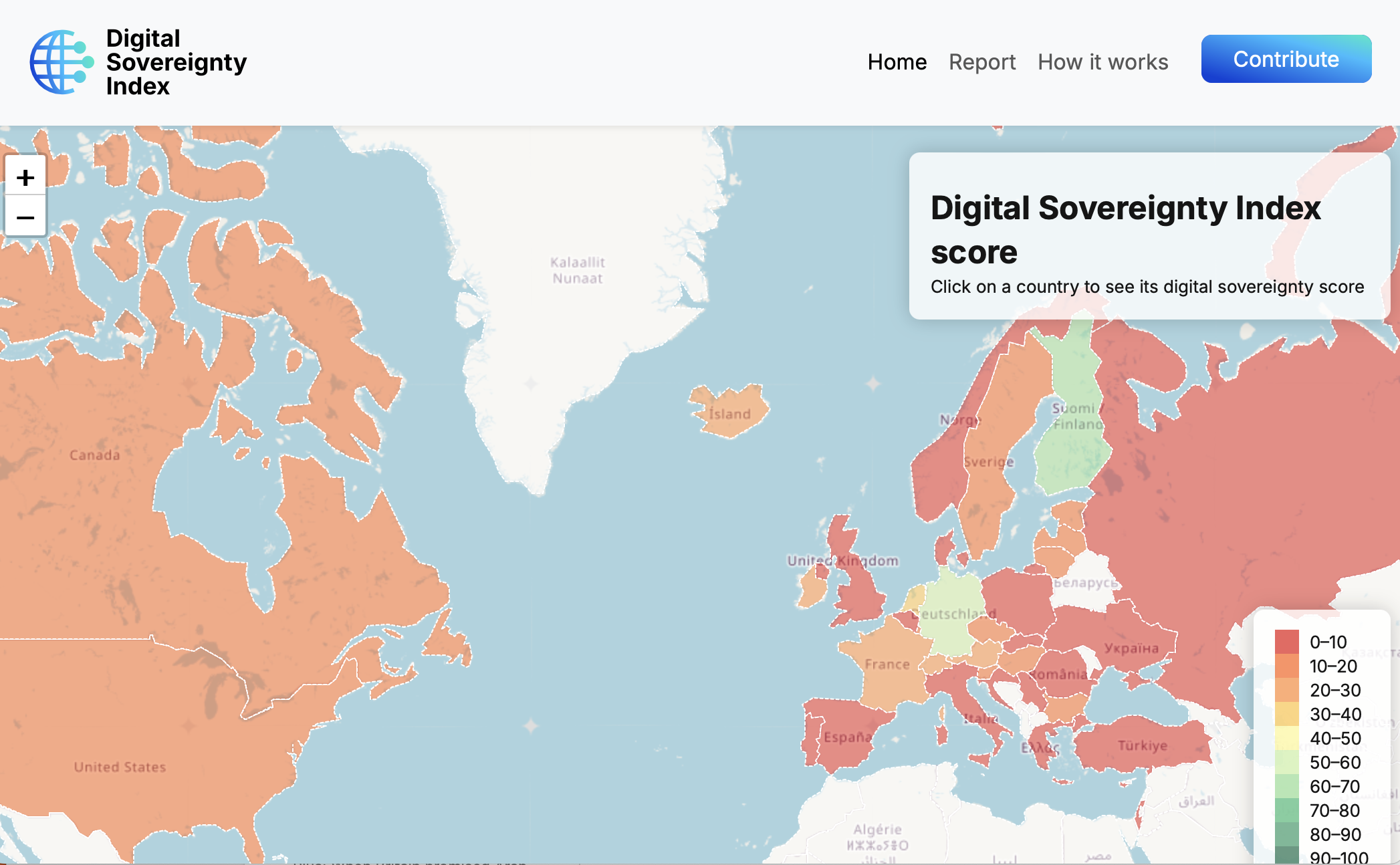
The DSI results paint a fascinating picture. At the top, Finland and Germany stand out with a density of sovereign servers far above the rest of Europe. Their strength lies not just in government policy but in the choices of citizens, SMEs, and organizations that have embraced open, self-hosted platforms. France, the Netherlands, Switzerland, and Iceland also perform well, though with a noticeable gap behind the leaders.
Other countries tell a more mixed story. Sweden — often seen as a digital frontrunner — lands just below the EU average. The United States, despite being home to the world’s largest tech firms, scores lower than expected, reflecting its overwhelming reliance on centralized proprietary services rather than self-hosted alternatives. Southern Europe shows an even sharper contrast, with Spain and Italy near the bottom despite ambitious policy statements on digital independence.
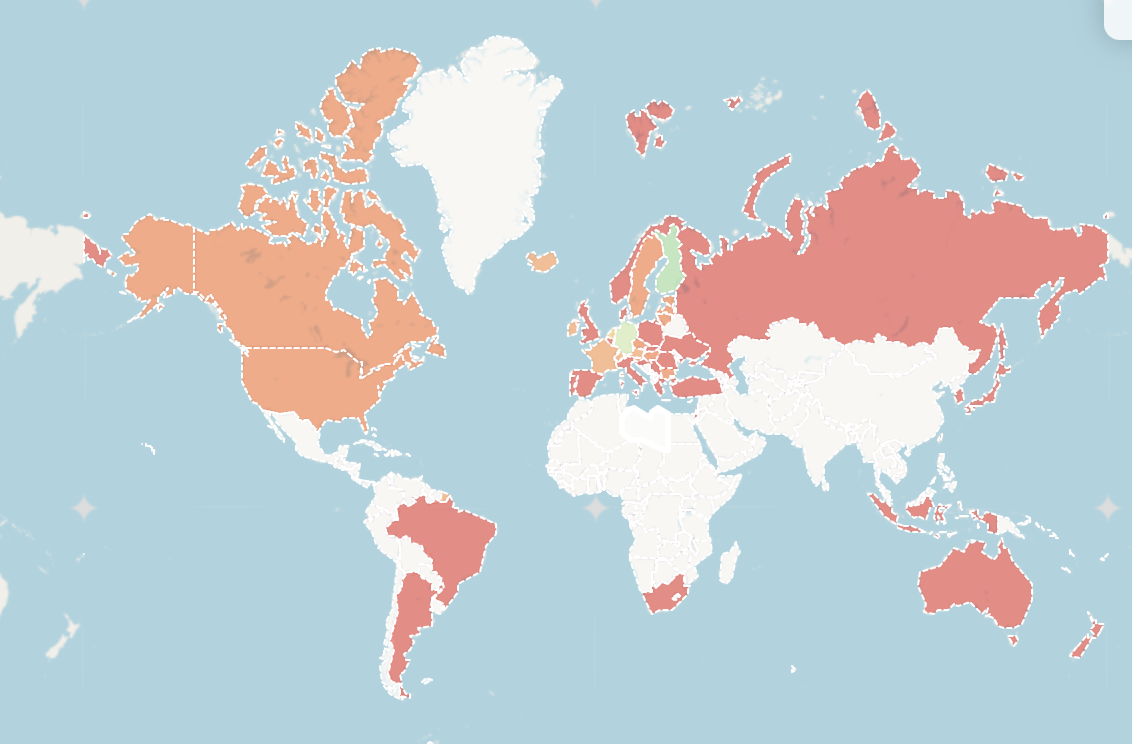
Taken globally, the picture is even starker. China’s domestic digital ecosystem is largely sovereign by design, built on local platforms like Alibaba Cloud, WeChat, and Baidu that dominate within its borders. The United States, on the other hand, dominates the export of cloud and productivity platforms worldwide but shows little sovereign self-hosting internally. Europe occupies a middle ground: it has strong regulatory ambitions and pockets of leadership, but its sovereignty remains patchy and unevenly distributed.
The DSI map makes this imbalance visible: sovereignty today is not a given, even for digitally advanced nations. It is actively built, through infrastructure choices, legal frameworks, and cultural habits of technology use.
Innovation as a Foundation for Sovereignty

If digital sovereignty shows whether a country has control of its infrastructure today, innovation capacity shows whether it will be able to sustain that control tomorrow.
The Global Innovation Index (GII) and the European Innovation Scoreboard (EIS) both shed light on this longer-term dimension. Switzerland has ranked number one in the world for over a decade, combining knowledge and technology outputs with strong creative industries. Sweden consistently ranks among the top three globally, and in the latest European Scoreboard, it retook the lead position within the EU. Denmark, Finland, and the Netherlands are also strong performers in Europe.
Beyond Europe, countries like Singapore and South Korea demonstrate how innovation ecosystems can become engines of resilience: Singapore leading in venture capital and digital adoption, South Korea excelling in R&D intensity and export complexity. Meanwhile, the United States and China dominate corporate R&D, intellectual property, and scale, reinforcing their ability to shape global platforms.
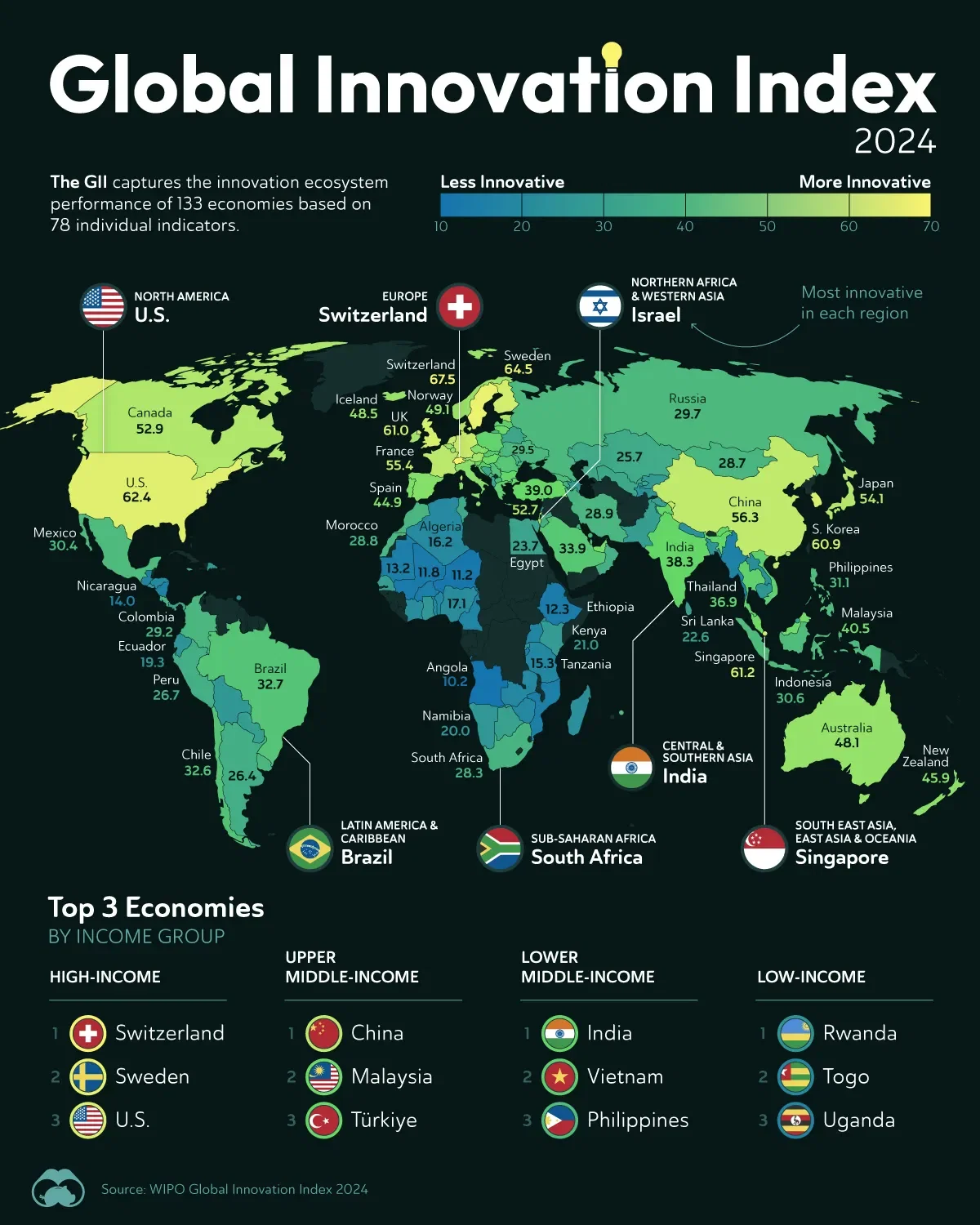
The European Innovation Scoreboard also shows dynamic shifts: Croatia has leapt forward from “Emerging Innovator” to “Moderate Innovator,” while countries like Cyprus and Hungary have lost ground despite local improvements, as the EU average continues to rise.
The lesson is clear: digital sovereignty cannot exist in isolation from innovation strength. Countries with robust R&D systems, creative outputs, and institutional capacity are more likely to develop their own sovereign technologies — from secure servers to large language models. Conversely, nations that rank high in innovation but low in sovereignty (like Sweden) highlight the gap between capacity and adoption. Bridging this gap is where policy, culture, and board-level leadership become decisive.
From Infrastructure to Intelligence

But the story does not end with servers and storage. Digital sovereignty is no longer only about where data lives and how emails are sent. It is now also about who controls the intelligence layer — the large language models (LLMs) that are shaping everything from search and communication to decision-making and creativity.
Here, the landscape shifts dramatically. The United States and China dominate almost entirely. OpenAI, Google, Meta, Anthropic, Baidu, and Tencent control the most advanced models, most of which are only accessible through foreign APIs. This creates deep dependencies: data passes through foreign jurisdictions, terms of use can change without warning, and access itself can be restricted.
If the infrastructure layer represented the first sovereignty battle, then AI and LLMs represent the second — and perhaps the more decisive one.
Europe’s Emerging Response

Europe has begun to push back. France’s Mistral AI has positioned itself as a champion of open-weight models, releasing Mixtral and Magistral so that researchers, governments, and businesses can run and adapt them independently. Germany’s Aleph Alpha has focused on trustworthy and explainable models, aligned with EU regulation and designed for sensitive enterprise and public-sector use. At the pan-European level, OpenEuroLLM is bringing together institutions across the continent to build models in all 24 official EU languages, ensuring linguistic and cultural diversity.
Switzerland has taken an ambitious step of its own, commissioning the Alps supercomputer to train large multilingual models that will be released completely open — not only weights, but also training code and documentation. In a world where most AI remains proprietary, this is a bold commitment to treating intelligence as a public good.
The Nordic Paradox: Infrastructure vs. Intelligence

Nowhere are the tensions of digital sovereignty clearer than in the Nordics. On the one hand, Finland leads the entire world in digital sovereignty, and Iceland scores well above the EU average. On the other, Sweden sits just below the European average, while Norway and Denmark trail far behind — comparable to Southern European countries that are usually not seen as digital leaders.
| Country | DSI Score | Position / Comment |
| Finland | 64.5 | #1 globally — clear leader in digital sovereignty, with strong adoption across categories. |
| Iceland | 22.6 | Above EU average, strong grassroots adoption despite small population. |
| Sweden | 14.3 | Just below EU average (16.3). Surprising for a digital pioneer, but shows reliance on foreign platforms. |
| Norway | 6.4 | Well below EU average, comparable to Spain/Italy in sovereign tool adoption. |
| Denmark | 6.5 | Also well below EU average, reflecting limited uptake of sovereign self-hosted solutions. |
| EU average | 16.3 | Baseline for comparison. |
This Nordic paradox shows that digital maturity does not automatically equal digital sovereignty. Despite their reputation for digital innovation, several Nordic countries remain dependent on global platforms for their digital backbone. Yet paradoxically, they are among the most ambitious when it comes to sovereign AI development.
Finland has launched the Viking family of models, covering all Nordic languages, alongside Poro-34B, trained on Finnish, English, and code using the LUMI supercomputer. Sweden has introduced GPT-SW3, built on the Berzelius supercomputer, and created SuperLim, a national benchmark to test Swedish AI. Norway, through NorwAI and national partners, has produced NorLLM and earlier models like NorBERT and NorT5, trained on national supercomputers with Norwegian media data. Denmark has developed SnakModel and Munin, and launched the Danish Foundation Modelsinitiative, supported by both government and industry.
Together, these projects ensure that Nordic languages and values are represented in the coming AI wave. Even if their infrastructure sovereignty scores differ, the region’s AI initiatives show a shared recognition: sovereignty in the age of AI requires owning not just infrastructure, but intelligence.
Responsible AI as a Measure of Sovereignty

Digital sovereignty is not only about infrastructure or innovation. It is also about the ethical and rights-based governance of AI. The Global Index on Responsible AI (GIRAI), published in 2024, provides the first comparative global view of how countries are ensuring that AI development and use align with human rights and democratic values.
GIRAI evaluates 138 countries across three dimensions: Responsible AI Governance (laws, policies, standards), Human Rights & AI (civil, political, social protections), and Responsible AI Capacities (institutions, skills, investments). Each is measured through government frameworks, government actions, and contributions from non-state actors such as universities and civil society.
The results show striking contrasts. The Netherlands, Germany, and Ireland top the global index, with strong frameworks and vibrant non-state ecosystems. The United States ranks fifth, driven by its universities, civil society, and corporate R&D, even if its federal frameworks remain fragmented. Japan sits 12th, notable for achieving similar outcomes through implementation strength rather than extensive frameworks. India enters the top 25 (25th), reflecting growing action but still facing governance and rights gaps. China, by contrast, ranks 32nd, highlighting the limitations of a sovereignty model built on state control but lacking in rights protections.
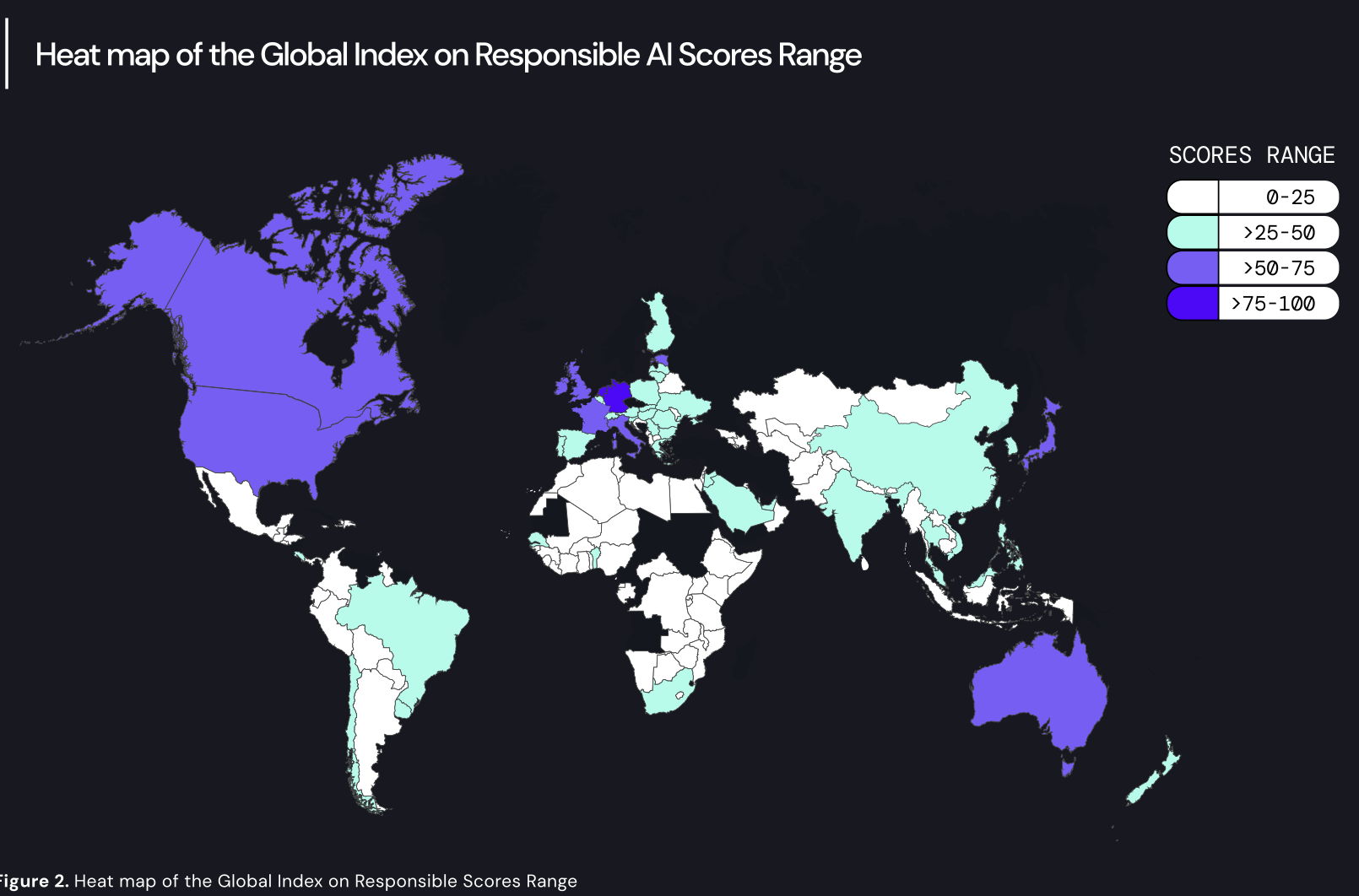
Notably, Finland is the only Nordic country included, ranking 20th with a score of 43.07. Sweden, Denmark, Norway, and Iceland are absent from this first edition due to limited in-country data collection, though they are expected to appear in future editions.
The headline insight is sobering: over two-thirds of countries score below 25 out of 100, with weak or nonexistent responsible AI frameworks. Even where national AI strategies exist, they often lack enforceable safeguards or mechanisms for redress when AI causes harm. Non-state actors are frequently the drivers of progress, compensating for gaps in government action.
And responsibility extends beyond national borders. Increasingly, AI operates not within a single organization but across ecosystems of partners, platforms, and jurisdictions. Responsible AI therefore also means ecosystem governance: ensuring interoperability, data sovereignty across borders, and aligned ethical standards. Without this, sovereignty can easily be undermined in shared digital infrastructures or global AI supply chains.
This ecosystem dimension is not only visible in GIRAI but also reflected in our academic research on AI leadership for boards, where we show that ecosystem orchestration and compliance are emerging as key board responsibilities. These insights are highlighted further in our upcoming book AI Leadership for Corporate Boards.
For sovereignty, this matters deeply. Countries and companies that score high in GIRAI — and that orchestrate responsible AI ecosystems effectively — demonstrate not only the capacity to regulate AI but also to align it with societal values. That combination is becoming the true foundation for autonomy in the digital era.
What Boards Must Consider

For boards, the picture is now three-dimensional. Infrastructure sovereignty ensures control of the digital backbone. Innovation capacity determines whether independence can be sustained over time. And responsible AI governancedecides whether AI can be deployed in ways that protect rights, comply with regulations, and maintain societal trust.
Yet in practice, AI is rarely confined to one organization. It is embedded in ecosystems — of cloud vendors, AI model providers, startups, regulators, and data partners. This adds two new layers of responsibility for boards:
-
Ecosystem orchestration: Boards should oversee not only how their organizations adopt AI, but how they engage with partners. Are they shaping ecosystems with shared value creation and aligned standards, or merely a dependent participant in someone else’s? As multi-agent systems begin to interact across companies and countries, this orchestration role will become strategic.
-
Ecosystem compliance: Risks such as bias, cascading failures, or breaches often spread across ecosystems. Boards must supervise how data flows are governed across jurisdictions, how vendor and partner compliance is verified, and how sovereignty is preserved when operations span multiple legal regimes.
Key questions for boards to ask include:
-
On infrastructure: Where does our data and compute run, and under whose jurisdiction?
-
On innovation: Are we investing enough in R&D and partnerships to build independence?
-
On responsibility: Do we have mechanisms for transparency, accountability, and redress in our AI systems?
-
On ecosystems: How do our vendors, partners, and multi-actor systems affect our sovereignty, and how do we orchestrate compliance and resilience across the network?
-
On resilience: How do today’s choices affect our ability to operate autonomously and responsibly in five to ten years?
Digital sovereignty, innovation, and responsibility are converging issues. Boards that integrate them into governance will not only reduce risk but also build competitive advantage by aligning innovation with trust — not only within their own organizations but across the ecosystems they depend on.
Closing Reflection

Digital sovereignty once meant servers and storage. Today it means intelligence, rights, and ecosystems. The Digital Sovereignty Index reveals how much control countries have over their digital backbone. The Global Innovation Index and European Innovation Scoreboard highlight whether they can sustain that independence. The Global Index on Responsible AI shows whether they can govern AI in ways that align with rights and values. And the emerging challenge of ecosystem governance shows that sovereignty is increasingly collective — requiring coordination across borders and networks.
Together, these four lenses — sovereignty, innovation, responsibility, and ecosystems — define the future of digital independence. Europe and the Nordics are beginning to sketch out what this could look like, building open infrastructures, investing in sovereign AI, and testing governance frameworks. The challenge now is to turn innovation into adoption, adoption into responsible practice, and responsible practice into resilient ecosystems.
As we emphasize in our academic research and forthcoming book AI Leadership for Boards, sovereignty and responsibility can no longer be seen in isolation. They must be cultivated within and across ecosystems.
For boards, the lesson is clear: sovereignty is no longer just about technology. It is about whether your organization — and the ecosystems it belongs to — can operate with freedom of choice, compliance with values and law, and resilience in disruption. In the age of AI, sovereignty and responsibility are inseparable, and ecosystems are the arena where they will be tested. The ability to shape the future on one’s own terms will depend on embracing all three.
Going Deeper: Events and Programs
We are delighted to invite board directors to a series of opportunities to deepen readiness for the AI era:
Exclusive Evening – September 3, Stockholm
An invitation-only gathering dedicated to the future of board leadership in the AI era, generously supported by Internetstiftelsen, Carl Piva, and Jannike Tillå.

Keynote: Stephanie Woerner, Scientist and Academic Director at MIT CISR
Stephanie will share her latest research on how board competencies shape digital transformation and how the definition of digitally savvy boards is evolving in 2025. Drawing on cutting-edge MIT insights and global boardroom practices, she will highlight what truly distinguishes top-performing boards today. We saved some spots for open application.
Apply to join here: Event registration
Deadline: August 29
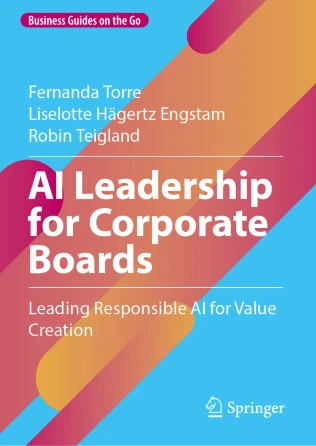
We’ll also give a sneak peek into our upcoming research on Boards’ Leadership of AI, and celebrate the pre-launch of our new Springer book:
AI Leadership for Corporate Boards
by Fernanda Torre, Liselotte Hägertz Engstam, Prof. Robin Teigland (Chalmers), and Prof. Stanislav Shekshnia (INSEAD).
Pre-order here: Springer link
Follow-up Webinar – September 4, 8:00–9:30 CET

AI Leadership Ambition and Transformation
With Professor Mats Magnusson, PhD Candidate Henrik Forzelius, and NED & Chair Tuomas Syrjänen.
(Open to all board directors.)
Register here: Boards Impact Forum
Updated Board Program
.
Board Oversight of Responsible AI for Value Creation
Runs September–October: 4 live sessions + 26 online modules. This research-based training helps board directors strengthen oversight of AI, governance, and sustainability.
Early Bird Extended: Enroll by 31 August to secure €1,900 + VAT (instead of €2,450), or choose the Board Leadership Mastery Bundle (AI + Sustainability) for €2,450 + VAT.
More information and enroll here: Program details
References
Country AI Index by Stanford
Earlier relevant blogposts
About Digoshen
This blog post was originally shared at the blog of Digoshen www.digoshen.com, the blog of Boards Impact Forum www.boardsimpactforum.com and the blog of the Digoshen founder www.liselotteengstam.com,
At Digoshen, we work hard to increase #futureinsights and help remove #digitalblindspots and #sustainabilityblindspots. We believe that Companies, Boards, and Business Leadership Teams need to understand more about the future and the digital & sustainable world to fully leverage the potential when bringing their business into the digital & more sustainable age. If you are a board member, consider joining our international board network and master programs.
Welcome to also explore the Digoshen Chatbot on AI Leadership for Boards and Boards Impact Forum, where the Digoshen Founder is the Chair.
Find a link to Digoshen Chair Liselotte Engstam Google Scholar Page and how the Digoshen Chair have contributed to AI Value Creation.
You will find more insights via Digoshen Website, and you are welcome to follow us on LinkedIn Digoshen @ Linkedin